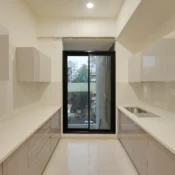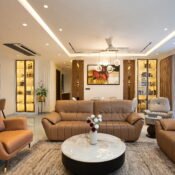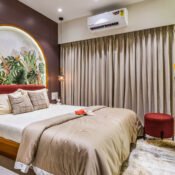

You are scrolling through interior design photos. Some look incredible. The lighting is perfect. The composition is flawless. The color grading is stunning. Then you see another photo of a similar space that looks ordinary. Same room. Different quality. Same photographer skill level? No. Different pricing strategy? Absolutely.
This is the core problem in interior design photography right now. Photographers do not know how to price their work. They do not understand the difference between luxury and mass market. They do not know how to justify their rates. So they either charge too little and burn out, or charge too much and get no clients.
This article solves that problem. It shows you exactly how to price your interior design photography services based on what the market will actually pay in 2026.
The Pricing Problem Every Interior Design Photographer Faces
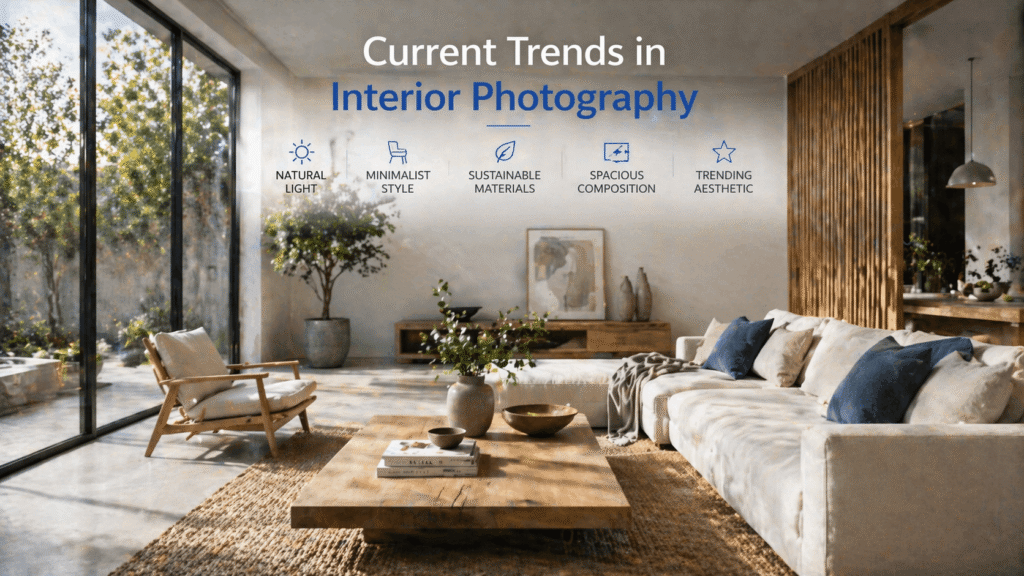
Current photography trends in 2026 emphasize natural light, minimalist design, sustainability, and spacious composition that premium photographers charge more for.
Every photographer struggles with pricing. You finish a shoot. You spend hours editing. You deliver beautiful images. Then the client pushes back on your price. They say another photographer quoted less. You feel pressured to drop your rate. You end up working for nearly nothing.
Why photographers charge different prices for similar work comes down to several factors. Experience matters. Equipment matters. Speed matters. Post production quality matters. But most photographers do not communicate any of this to clients. So clients think all interior design photography is the same.
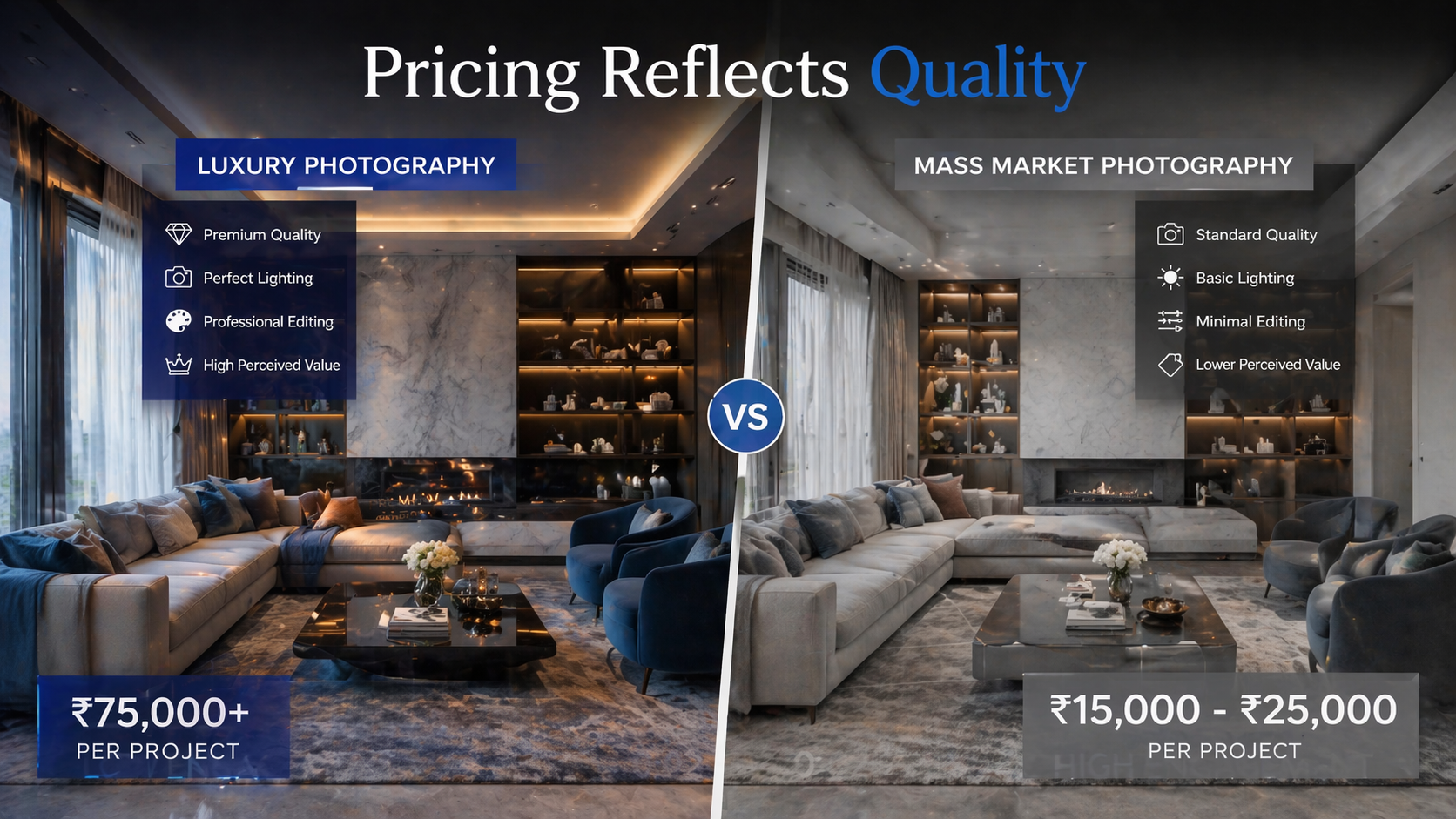
Understanding the luxury vs mass market divide is essential. Luxury clients pay premium prices for exceptional quality. They expect perfection. They expect experienced professionals. They expect premium editing and attention to detail. Mass market clients want good quality at reasonable prices. They are price sensitive. They need results but do not require perfection.
How to know which market segment you belong in depends on your skill level, investment in equipment, and target clients. A photographer starting out with basic equipment belongs in mass market. A photographer with years of experience, premium equipment, and a portfolio of high-end work belongs in luxury. Most photographers fall somewhere in between.
What Are the Top Photography Trends in 2026
The 7 C’s of photography—Composition, Color, Clarity, Contrast, Craft, Creativity, and Consistency—are principles that separate premium from basic interior photography.
Current trends in interior design photography reveal what clients actually value. Natural light is trending more than ever. Clients want photos that look like real spaces, not overly edited perfection. Sustainable design documentation is trending as clients care about environmental responsibility. Minimalist styling is trending over cluttered spaces. Space and emptiness create luxury feel.
How premium pricing aligns with current market trends means understanding that trend awareness is a skill clients pay for. A photographer who understands current trends creates photos that feel current. A photographer stuck in old techniques creates photos that feel dated. Premium clients pay for relevance.
What luxury clients expect from interior design photography is specific. They expect the photographer to understand design principles. They expect perfect lighting. They expect editing that enhances without looking fake. They expect quick turnaround. They expect someone who speaks their language about design.
What mass market clients actually need and pay for is different. They need clear photos of their space. They need decent lighting. They need basic editing. They need reasonable turnaround. They need affordable rates.
The 7 C’s of Photography That Justify Premium Pricing
Luxury interior design photography commands premium pricing because of superior composition, lighting, color grading, and overall professional quality that mass market photography does not deliver.
Photography professionals use seven principles to evaluate quality. Understanding these principles helps you explain why you charge what you charge.
Composition and framing in luxury vs mass market shows clear differences. Luxury photography uses rule of thirds perfectly. Each element is positioned intentionally. Mass market photography captures the space adequately but composition is less deliberate. Your composition skill directly determines your pricing power.
Color grading and mood creation at different price points separates amateurs from professionals. Luxury photography has color grading that creates mood and feeling. The colors are harmonious. The warmth or coolness is intentional. Mass market photography has basic color correction. It is clean but not emotionally compelling.
Clarity, contrast, and craft that command higher rates are about sharpness, detail visibility, and overall polish. Luxury photography shows every detail clearly. Contrast is perfect. The overall craft is evident in every pixel. Mass market photography is technically correct but lacks the polish that justifies premium pricing.
Understanding the 20-60-20 Rule and 1/3 Rule in Interior Photography
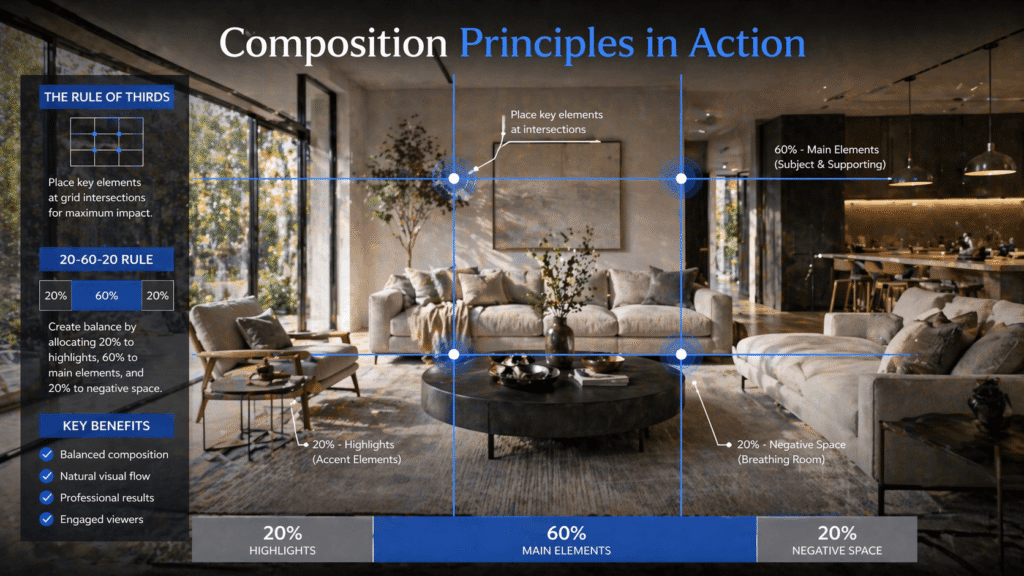
Photography has composition rules that professionals know and apply.
The 20-60-20 rule states that in a balanced composition, roughly 20 percent should be your main subject, 60 percent should be supporting elements, and 20 percent should be negative space. This rule creates balanced compositions that feel sophisticated. Photographers charging premium rates apply this rule consistently.
The 1/3 rule photography principle (also called rule of thirds) divides the frame into three equal sections both horizontally and vertically. Placing key elements along these lines creates more interesting composition than centering everything. Premium photographers use this rule instinctively. Mass market photographers do not always apply it.
Using photography rules to justify your rates is straightforward. You can explain to clients that your compositions follow proven principles that create professional results. You can show examples of how these rules improve the visual impact. Clients understand that skill has value.
How Much to Charge for Interior Design Photography
This is the question every photographer wants answered directly.
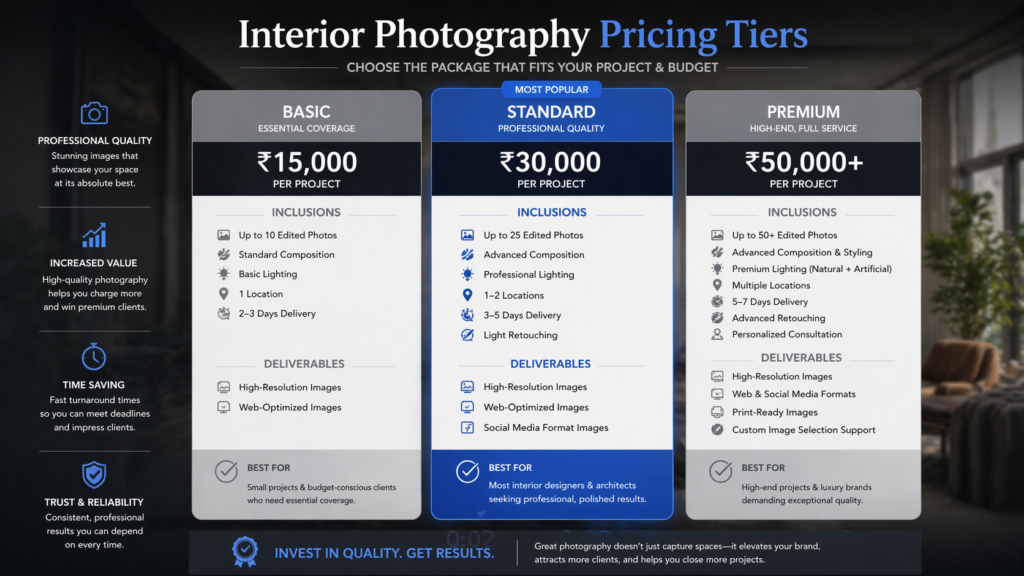
Luxury interior photography pricing in 2026 ranges from 50,000 to 2 lakh rupees per day depending on photographer reputation and location. Luxury photographers also charge per image at 2,000 to 5,000 rupees per final edited image. Some luxury photographers work on project basis at 1.5 lakh to 5 lakh rupees per project depending on scope.
Mass market interior photography pricing ranges from 10,000 to 30,000 rupees per day. Per image pricing is 500 to 1,500 rupees per final edited image. Project based pricing ranges from 15,000 to 50,000 rupees depending on number of rooms and deliverables.
Value based pricing framework that clients accept ties your price to results. A photographer who brings 10 new clients per month to a designer justifies premium pricing through value delivered. A photographer who helps a brand increase sales justifies premium pricing through business impact. Price based on value, not just time spent.
The Real Difference Between Luxury and Mass Market Photography
Beyond pricing, real differences exist in how photography is delivered.
Equipment and gear investment at each price point differs significantly. Luxury photographers invest 5 to 15 lakh rupees in cameras, lenses, and lighting. They have backup equipment. They have professional lighting rigs. Mass market photographers work with 1 to 3 lakh rupees in gear. They may not have backups. They rely more on natural light.
Post production and editing time differences are substantial. Luxury photography might get 30 to 60 minutes of editing per image. Mass market photography gets 5 to 10 minutes per image. The time difference shows in quality.
Client experience and service delivery standards vary widely. Luxury photographers send galleries within three days. They provide proof prints. They offer revisions. They provide premium packaging. Mass market photographers deliver within one to two weeks. They provide digital files. Revisions are limited.
Step by Step Pricing Your Interior Photography Services
Calculate your actual costs first. How much do you spend on equipment maintenance? How much on software subscriptions? How much on insurance? How much on travel? How much on backup equipment? Add all costs. Divide by estimated annual shoots. That is your minimum per-shoot cost.
Determine your target market segment. Are you starting out? Go mass market. Do you have experience and premium equipment? Go luxury. Are you growing? Be mid-market. Your market segment determines your pricing range.
Set rates that reflect your market position. Do not undercut to get work. Do not overprice and get rejected. Price slightly below market average initially to build portfolio. Raise rates as demand increases.
Real Examples of Pricing Success and Failure
Photographers underpricing and losing money are common. Someone charges 10,000 rupees per shoot, spends three hours shooting, four hours editing, one hour meetings. That is eight hours for 10,000 rupees. Terrible rate. They burn out quickly.
Photographers overpricing and getting no clients happens too. Someone with three years experience charges like someone with 15 years. Clients go elsewhere.
Photographers pricing right and building sustainable business are the success stories. They understand their costs. They understand their market. They price fairly. They get consistent work. They are profitable.
Common Mistakes in Interior Photography Pricing
Charging the same rate for all projects ignores reality. A simple apartment shoot is different from a luxury villa shoot. Different projects deserve different prices.
Not understanding what clients actually value means missing opportunities. Clients value speed. Clients value reliability. Clients value professionalism. Price should reflect these values, not just shooting time.
Competing on price instead of value destroys margins. The photographer who competes on price loses. The photographer who competes on value wins.
Best Practices for Interior Design Photography Pricing
Create tiered service packages. A basic package includes edited images. A premium package includes drone shots, virtual tour, and extra editing. A luxury package includes everything plus print options and longer turnaround guarantee. Tiered pricing lets clients choose their level.
Communicate value to justify your rates. Show before-and-after images. Show how your photos help designers get clients. Show how your work impacts business. Clients pay for value.
Adjust prices as your skills improve. Every year, raise your rates slightly. As you gain experience, your photos improve. Price should reflect that.
Frequently Asked Questions About Interior Photography Pricing
Should I charge hourly or per project? Per project is better. Hourly encourages slow work. Per project encourages efficiency.
How do I raise prices without losing clients? Communicate the improvement in your work. Show value. Increase prices gradually. Existing clients often accept increases. New clients do not know the old price.
Can I charge differently for different clients? Yes. Luxury clients pay more. Mass market clients pay less. It is completely acceptable.
What if clients say another photographer is cheaper? Show your value. Show your results. Show why you are worth more. If they only care about price, they are not your client.
Price Your Interior Photography Services Correctly
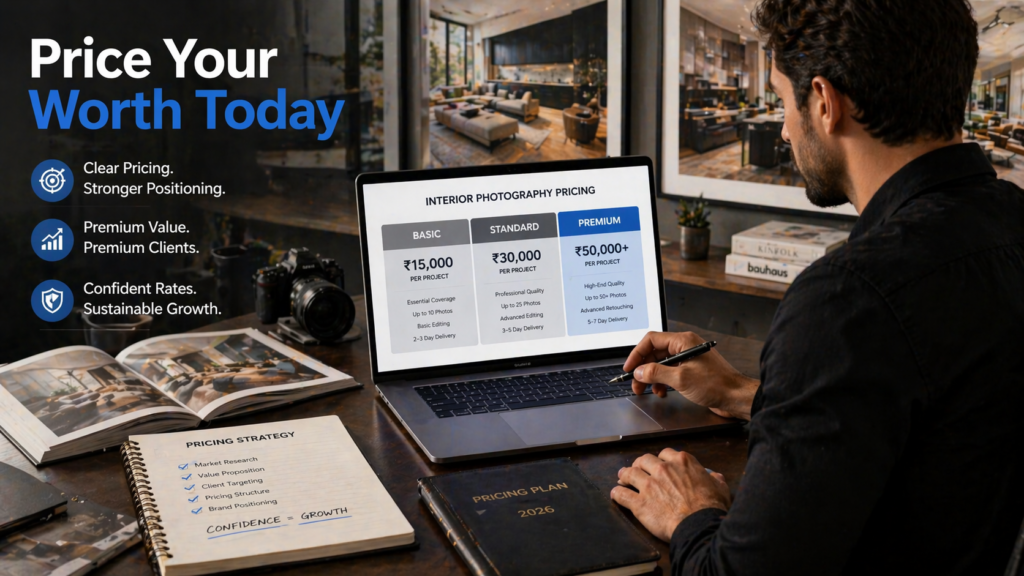
Professional interior photographers apply the rule of thirds and 20-60-20 composition principle, creating balanced images that justify premium pricing.
This is the year to stop undercharging. Stop working for nearly nothing. Stop feeling like your work is not valued.
Understand your market. Price fairly. Communicate value. Build sustainable business. That is the formula.
Interior design photography is a service business. You deserve to be paid fairly for your expertise and time. Professional interior design photography services like corporate video production and ecommerce photography command premium pricing because they deliver professional results that clients value.
Price your services correctly starting today. Your business depends on it.