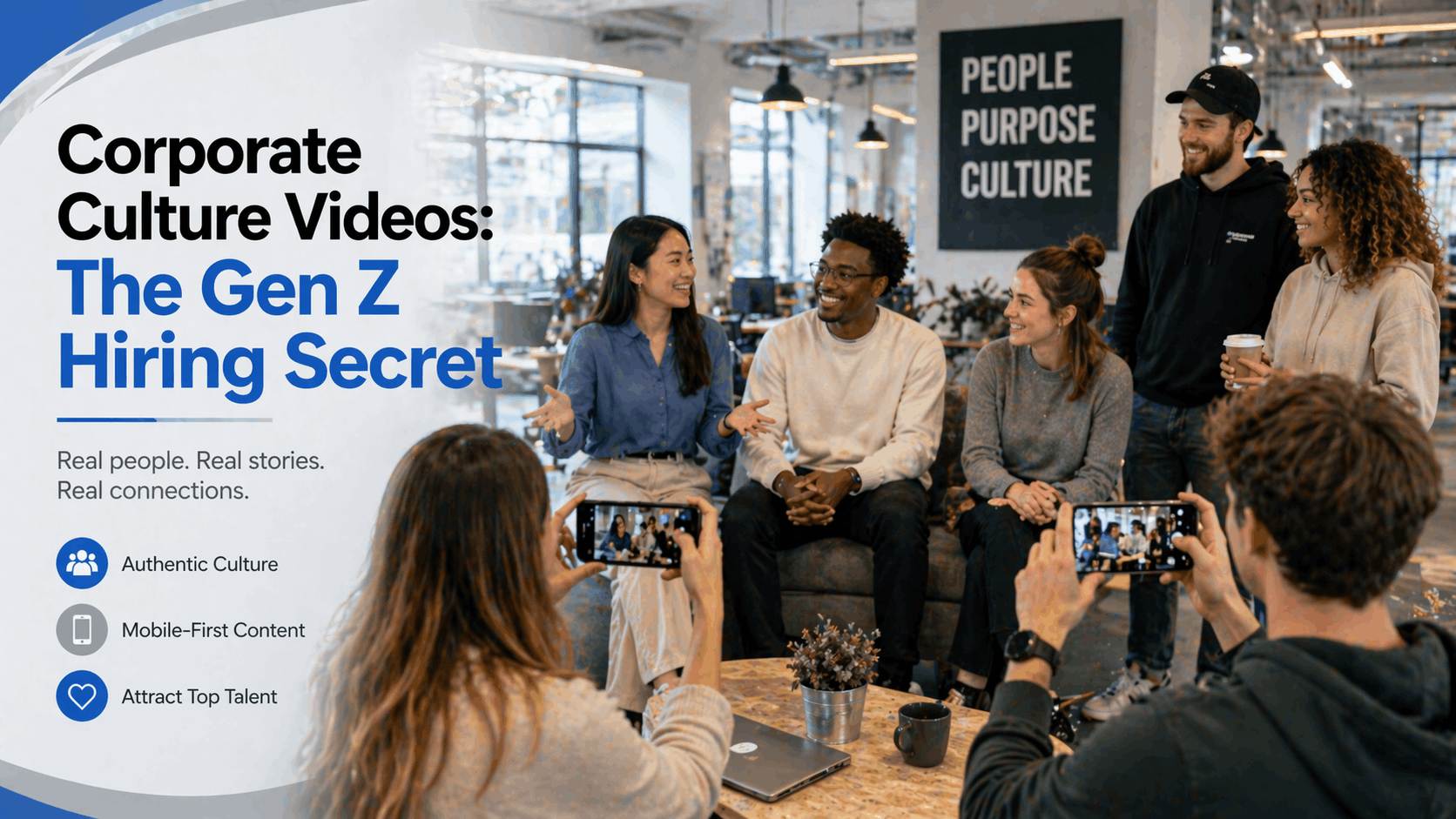
It’s 2026. You’re scrolling through job applications and wondering why all the talented people keep picking your competitor over you. They visited your website. They saw your generic about us page. They clicked away.
Meanwhile, your competitor posted a three minute video showing actual employees talking about their day. No scripts. No corporate fluff. Just real people, real moments, real work.
That’s the difference corporate culture videos make.
Your best talent is watching videos. They’re watching on LinkedIn, Instagram, TikTok. They’re making decisions about which company to join based on what they see. And if what they see doesn’t feel real, they’re leaving.
This is no longer optional. This is how business works in 2026.
Introduction: The Generational Shift Your HR Team Needs to Know About
Visual comparison showing video accessibility transformation with captions and audio descriptions enabling better understanding for deaf and blind audiences. The left side shows unclear video without accessibility features, while the right side displays the same video with clear captions and detailed audio description information. This powerful comparison demonstrates why accessibility in videography is not optional but essential for reaching your complete audience.
Your HR department is probably still using hiring tactics from 2015. Job postings. The same questions in every interview. Career pages that list benefits nobody cares about.
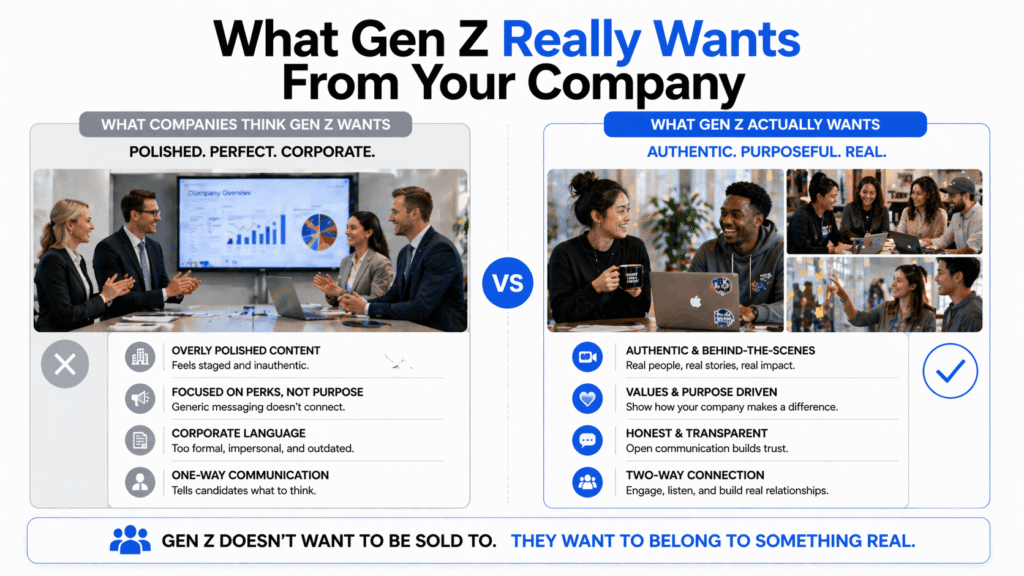
Gen Z isn’t responding to that anymore. They want to see the actual workplace. They want to hear from actual employees. They want to know if this company is real or just trying to look good on paper.
Why your company’s current culture communication isn’t working anymore.
Business opportunity visualization showing market expansion through video accessibility including 1 billion disabled viewers, legal compliance requirements, and strong ROI metrics. This infographic makes clear that video accessibility is not just an ethical choice but a sound business investment with direct impact on revenue and market reach. Companies implementing accessibility in videography see immediate improvements in engagement, views, and conversions.
Most companies still hire the way they did ten years ago. They create polished videos where employees are reading scripts, smiling at the right moments, delivering the company message perfectly.
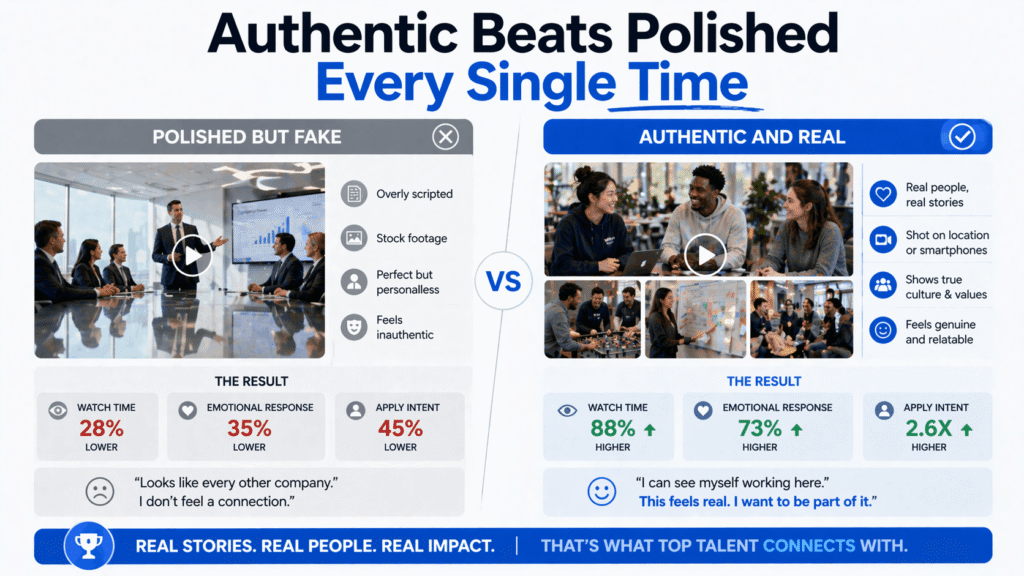
It doesn’t work. Everyone knows it’s fake. The moment a video looks like an advertisement, Gen Z employees stop watching.
Here’s what happens instead. A candidate sees a generic job posting. They Google your company. They find a professional video with perfect lighting, perfect backgrounds, everyone wearing the same colors. Their immediate thought? This place is fake. These people don’t look like they actually work here.
They apply to the next company instead.
What Gen Z actually wants to see from their employer
Gen Z doesn’t want to see perfect. They want to see real. They want to see actual employees describing their actual jobs without a script. People who look like they work there talking about what they actually do. Real workplace moments, not staged ones. Honest conversations about what’s good and what’s hard about working there.
That’s what makes someone watch a video twice. That’s what makes someone apply for the job.
How corporate culture videos solve this problem
Professional video editing interface showing caption creation process with multiple caption tracks, timing controls, and speaker identification for accessibility in videography. This software interface demonstrates how modern tools make adding captions to videos straightforward and efficient. Whether using YouTube’s built-in caption editor, Descript, or professional services like Rev, the process has become accessible to all video creators.
Corporate culture videos are your answer. Not the polished kind. The real kind.
A good culture video shows your actual workplace. Your actual people. Your actual culture. It’s raw, it’s human, it’s honest. And it works because it’s what Gen Z is looking for.
When a candidate watches a 2 minute video of your team actually working together, laughing, solving problems, being themselves, they get a real sense of what the job is like. No filtering. No corporate messaging.
That’s talent acquisition. That’s retention. That’s building a company people actually want to work for.
Understanding Gen Z Workplace Expectations
be clear about who we’re talking to. Gen Z is the generation that grew up with social media. They can smell corporate messaging from miles away. They know when someone is being authentic and when they’re performing.
What defines Gen Z in the workplace
Gen Z employees are different. They’re more comfortable with remote work. They expect flexibility. They care about mental health. They want to work somewhere with purpose. They won’t stay in a toxic environment just for a paycheck.
They also expect their employers to communicate honestly. They want to know what’s really going on. They want leaders who are real with them.
Why they demand authenticity over corporate polish
Authenticity is currency with Gen Z. It’s worth more than any benefit package. More than any perks.
When they see corporate polish, they see something to hide. When they see real people having real conversations, they see a company they might actually want to work for.
This isn’t a preference. This is how their brains are wired. They grew up watching creators on YouTube who are successful because they’re authentic. They trust influencers who are real. They scroll past polished ads. They stop for genuine content.
Your workplace content needs to work the same way.
The real impact of workplace content on talent acquisition
ere’s what matters. Companies that show real workplace culture get more applications from better candidates. These candidates stay longer. They refer their friends. They become brand ambassadors.
Companies that rely on generic job postings and scripted videos get fewer applications. The candidates they do hire are often disappointed because reality doesn’t match what they expected. They leave.
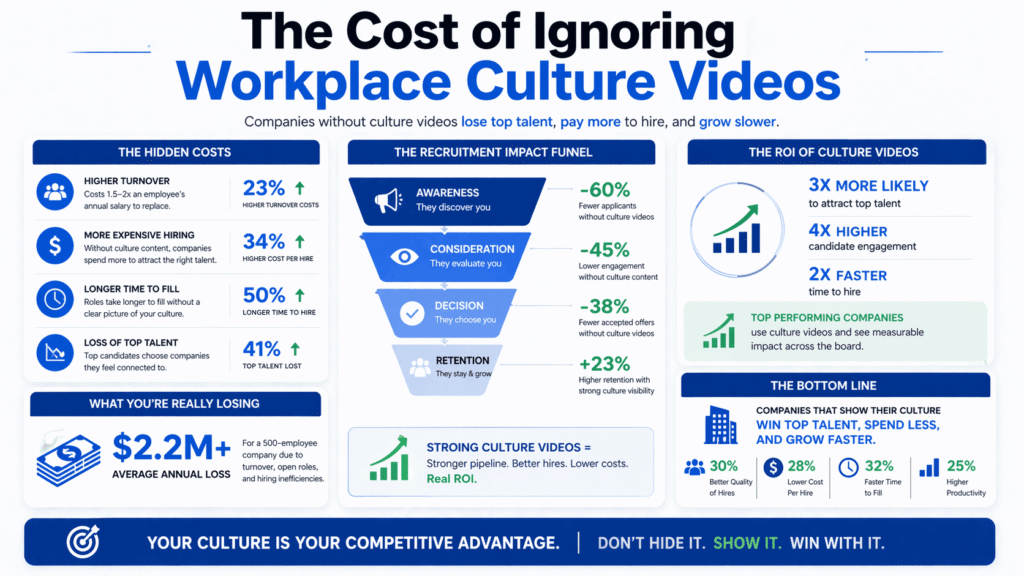
The cost difference is massive. Hiring costs money. Training costs money. Turnover costs money. All of that goes down when you have real culture content that sets honest expectations.
The Business Case for Corporate Culture Videos
Let’s talk about why your company needs this.
How bad culture communication costs you top talent
Think about your last hiring round. How many positions took three months to fill? How many candidates did you lose to competitors? How many of your good people left in the first six months?
That’s the cost of bad culture communication. You’re not telling people why they should work here. You’re relying on luck.
Every day your best talent position sits empty, you’re losing money. Your team is overworked. Projects are delayed. Customers might be complaining.
And the whole time, candidates are choosing your competitor because they saw a better culture video.
Real stats on Gen Z employee retention
Here’s something you need to know. 75% of Gen Z employees say company culture influences their decision to join or stay. Not salary. Not benefits. Culture.
They’ll leave a higher paying job for better culture. They’ll stay at lower pay if the environment is right.
Culture videos directly impact that perception. A good culture video can convince someone to apply. It can convince them to accept the job. It can convince them to stay.
ROI of investing in quality workplace videos
Let’s do the math. A good corporate culture video costs between 2000 to 10000 rupees depending on your approach. In house production is cheaper. Professional production costs more.
One quality hire costs way more than that to acquire. So even if your video brings in one better candidate who stays twice as long, you’ve paid for itself.
If your video helps you fill one position faster, you’ve paid for itself. If your video helps retain three employees you would have lost, you’ve paid for itself multiple times over.
This isn’t an expense. This is an investment in your most important asset. Your people.
What Makes an Effective Corporate Culture Video
Not all workplace videos work. Some actually make things worse.
Authenticity beats production value every time
Stop trying to make your workplace videos look like Hollywood movies. Stop hiring expensive production companies that insist on lighting rigs and professional crews and expensive cameras.
The best corporate culture videos look like they were made on a phone. Because authenticity is more valuable than production quality. Always.
A video where your CEO is talking directly to the camera about the company vision, unscripted, unpolished, is more powerful than a cinematic production with perfect lighting and music.
Showing real employees telling real stories
The most engaging workplace videos feature your actual employees. Not actors. Not professional speakers. Your people.
Your software developer talking about their favorite project. Your accountant explaining why they love working in your company. Your customer service person describing a difficult situation they solved.
Real people telling real stories. That’s what stops the scroll. That’s what makes people apply.
Why scripted content fails with younger generations
Gen Z can spot a script from a mile away. The moment an employee starts sounding like they’re reading something, the video loses credibility.
The best workplace content is barely scripted. It’s guided conversation. It’s questions and answers. It’s real dialogue.
If you write a full script and ask someone to memorize it, they’ll sound fake. If you ask them a real question and let them answer naturally, they’ll sound real. That’s the difference between videos that work and videos that don’t.
Common Corporate Culture Video Mistakes Companies Make
Most companies mess this up. Here’s how to avoid it.
Over polishing until nobody recognizes the company
Some companies hire production companies that add so much polish the workplace doesn’t look like itself anymore. The office looks like a showroom. The employees look like they’re in a movie.
This is the worst thing you can do. You’ve spent money to make your company look fake.
Making videos only about the employer, not the employee experience
Bad culture videos spend the whole time talking about the company. Our mission. Our values. Our growth. Boring.
Good culture videos focus on the employee. What’s it actually like to work here? What do you get out of it? Why do people stay?
Flip the perspective. Make the video about them, not you.
Ignoring video accessibility and mobile viewing
Most people watch videos on their phones. In the gym. On the bus. With sound off.
If your video doesn’t work on mobile, most people won’t watch it. If it doesn’t have captions, people watching without sound will skip it.
Make videos mobile first. Add captions. Make them short. This is not optional.
Failing to update content regularly
A video from 2024 doesn’t represent your 2026 workplace. Trends change. Teams change. Office layouts change.
Your culture content needs to stay fresh. New employees. New projects. New moments.
Outdated content makes your company look stale.
Employee Stories that Actually Resonate
What kind of stories work? Here are the ones that actually get engagement.
Day in the life format that works
“Day in the life” videos work because they’re simple and relatable. Wake up. Commute. Meetings. Lunch. Projects. Home.
But make it real. Show the actual day. The coffee break. The funny moment in the meeting. The frustration and the win.
Career growth journey narratives
Where do people end up if they work here? Career progression matters to Gen Z. They want to see someone who started as a junior and became a senior. Or someone who switched departments and found their calling.
This storytelling works because it answers the question everyone has. What’s my future here?
Team culture and work friendship content
People join companies for the work. But they stay for the people. Show your team actually getting along. Actual friendships. Actual collaboration.
This is powerful because it’s what people really care about.
Impact and purpose driven storytelling
If your company does something meaningful, show it. How does your work actually impact people? What’s the point beyond making money?
Gen Z wants to work somewhere with purpose. Show that purpose.
How to Plan Your Corporate Culture Video Strategy
Before you hit record, you need a plan.
Identify what you actually want to communicate
What’s the main thing you want people to know about working here? What’s your biggest hiring challenge? What keeps your best people around?
Answer those questions first. That becomes your content focus.
Start with employee interviews, not scripts
Don’t write scripts. Interview people. Ask them real questions. What do you love about your job? What’s challenging? Why do you stay?
Record those conversations. Use the real quotes and moments. Build your video around that.
Choose between long form and short form content
Long form (5 to 10 minutes) works for deep dives. Culture documentaries. Detailed stories. These work on your website and in recruitment.
Short form (1 to 3 minutes) works for social media. LinkedIn. Career pages. Attention spans are short. Make it punchy.
Use both. Different platforms need different lengths.
Plan a realistic production timeline
Production takes time. Planning takes time. Editing takes time.
Plan 2 to 3 weeks minimum. If you’re doing it professional, plan a month or more. Don’t rush this.
The Technical Side of Creating Great Workplace Videos
You don’t need expensive equipment. You need good fundamentals.
Lighting and audio quality matters more than fancy effects
Bad lighting makes everything look amateur. Bad audio makes everything unwatchable.
Good lighting is simple. Shoot near windows. Use basic desk lamps. Get natural light.
Good audio is even simpler. Use a basic microphone. External ones are cheap. Avoid built in phone mics.
Using phone cameras and simple equipment
Modern phones shoot video better than cameras from five years ago. You probably have everything you need already.
Phone plus basic microphone plus good lighting plus simple editing software. That’s your setup. Nothing expensive needed.
Mobile first editing and distribution
Edit vertical. Edit short. Edit with captions. Remember most people watch on phones.
Vertical videos work better on mobile than horizontal ones.
Captions and accessibility features you can’t skip
Add captions. People watch without sound. Add captions for accessibility. People watch with hearing loss.
This isn’t optional anymore. It’s standard practice.
Where to Use Your Corporate Culture Videos
Create once. Use everywhere.
Recruitment and career pages
Your career page should feature culture videos. Make it the first thing candidates see.
LinkedIn and social media strategy
Short clips on LinkedIn. Reels on Instagram. Even TikTok if you’re trying to reach Gen Z.
Clip out 30 second moments. Use multiple videos to cover all your platforms.
Company induction and onboarding
Show new employees what they’re walking into. Let them hear from their future teammates.
Internal communications and team building
Culture videos aren’t just for hiring. They work for internal communication too. Celebrating wins. Announcing changes. Building team bonding.
Investor and stakeholder presentations
Investors care about company culture. Show them it’s healthy. Show them your people are engaged.
The Cost Reality of Corporate Culture Videos
Let’s talk money.
Budget options for different company sizes
Small company (under 50 people): Basic DIY videos cost nothing. Outsource editing 1000 to 3000 per video.
Medium company (50 to 500 people): Professional in house production 5000 to 15000 per video.
Large company (500 plus people): Dedicated production teams or agencies 20000 to 100000 per video.
All of these options work. Choose what fits your situation.
In house vs professional production comparison
In house is cheaper. Professional is faster. In house builds internal skills. Professional looks more polished.
For culture videos, in house often works better because authenticity is more important than polish.
Hidden costs you need to know about
Equipment: Even basic gear costs something.
Time: Someone needs to plan, shoot, edit. That’s hours.
Travel: If you have remote teams, you might need to visit offices.
Licensing: Music and stock footage have costs.
Budget for all of this.
Long term investment perspective
Think about this as a continuous investment, not a one time project.
One video per month is good pace. One video per quarter is minimum.
Build it into your yearly budget. Make it a regular project, not a special event.
Measuring the Impact of Your Corporate Culture Videos
How do you know if this is working?
Metrics that actually matter
Views don’t matter. Engagement does. Are people watching to the end? Are they sharing? Are they commenting?
Don’t just count views. Look at watch time. Look at shares. Look at comments.
Tracking recruitment improvements
How many applicants come from your careers page? How many mention they saw your culture video? How many say that’s why they applied?
Track this. It shows you what’s working.
Employee engagement measurement
Ask your team. Do they feel the videos represent them accurately? Would they recommend the company based on the videos?
Internal surveys work better than external metrics for this.
Retention and satisfaction indicators
Your real metric is retention. Are people staying longer? Are they more engaged? Do they feel better represented?
Track this over six months and a year. That’s your real ROI.
Gen Z Specific Trends Shaping Workplace Video Content
What does Gen Z actually want to see?
Work life balance messaging that resonates
Gen Z doesn’t want to hear about flexible hours. They want to see it. Show people leaving at 5. Show them with laptops closed on weekends.
Actions speak louder than policies.
Diversity and inclusion in on screen representation
Diverse teams are normal. Show that. Different backgrounds. Different identities. Different perspectives. This matters to Gen Z.
Climate and social responsibility content
Show the company’s commitment to climate and social issues. This might matter more than you think.
Mental health and wellness focus
Show your wellness programs. Show people actually using them. Show the company caring about mental health, not just productivity.
Getting Started: Your Action Plan for Corporate Culture Videos
Ready to start? Here’s what to do.
Quick assessment of your current situation
What’s your biggest hiring challenge? What keeps people around? What would you want to know if you were applying?
Answer those first.
First steps without massive budget
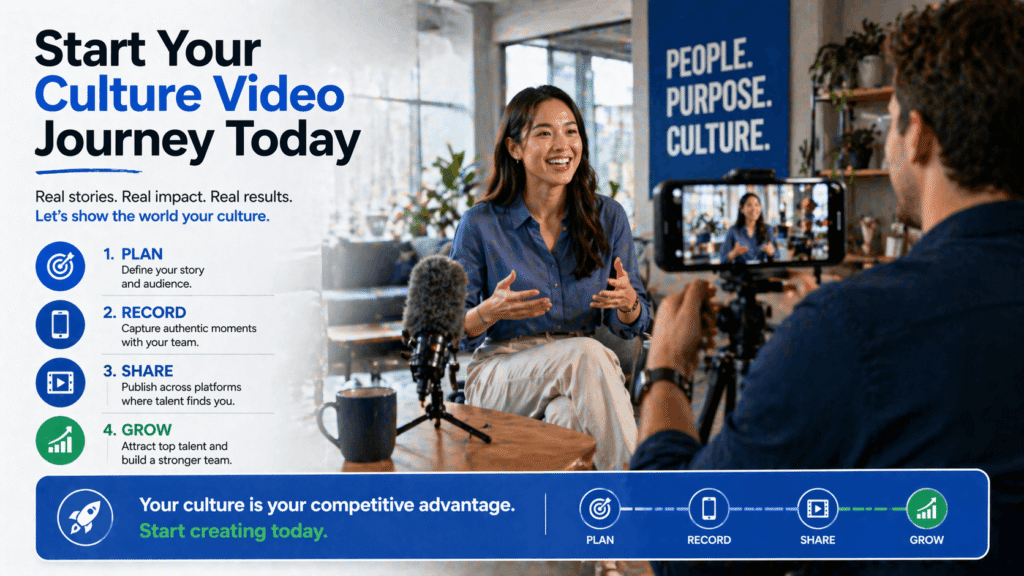
Grab your phone. Ask five employees real questions about working here. Record their answers. Edit it together. Post it.
That’s your first video. It costs almost nothing. It works better than you’d expect.
Timeline for implementation
Month 1: Plan and identify your story.
Month 2: Shoot your first video.
Month 3: Edit, refine, distribute.
Then repeat monthly.
Building internal support for the project
Talk to your team first. Explain why you’re doing this. Ask who wants to be involved. Get buy in before you start.
The best videos come when your team actually wants to be part of it.
Conclusion: The Companies Missing Out Will Regret It
Successful videographer demonstrating how accessibility in videography creates competitive advantage, expands audience reach, and drives business growth. This is where the journey leads when you commit to making videos accessible. More viewers, better engagement, stronger business results, and the satisfaction of truly reaching your complete audience including disabled viewers.
Here’s what’s going to happen. In six months, every company will realize they need corporate culture videos. They’ll all start producing them.
The companies who start now will have a library of content. They’ll have seen what works and what doesn’t. They’ll have a process. They’ll be reaching better candidates.
The companies who wait will be scrambling. Trying to catch up. Making videos that feel rushed.
Your competitor is probably already thinking about this. They’re probably recording videos right now.
So here’s your question. Are you going to be the company that’s ahead of the curve on workplace video content? Or are you going to be the company scrambling to keep up?
The time to start is now. Not next quarter. Not next year. Now.
Pick up your phone. Ask your first employee why they work here. Record the answer. Edit it. Post it.
That’s your start. That’s your path to better talent acquisition and retention. That’s how you compete for Gen Z talent in 2026.
The companies that embrace corporate culture videos right now will have the best teams. The best retention. The best results.
That’s not a prediction. That’s how the future of work actually works.