
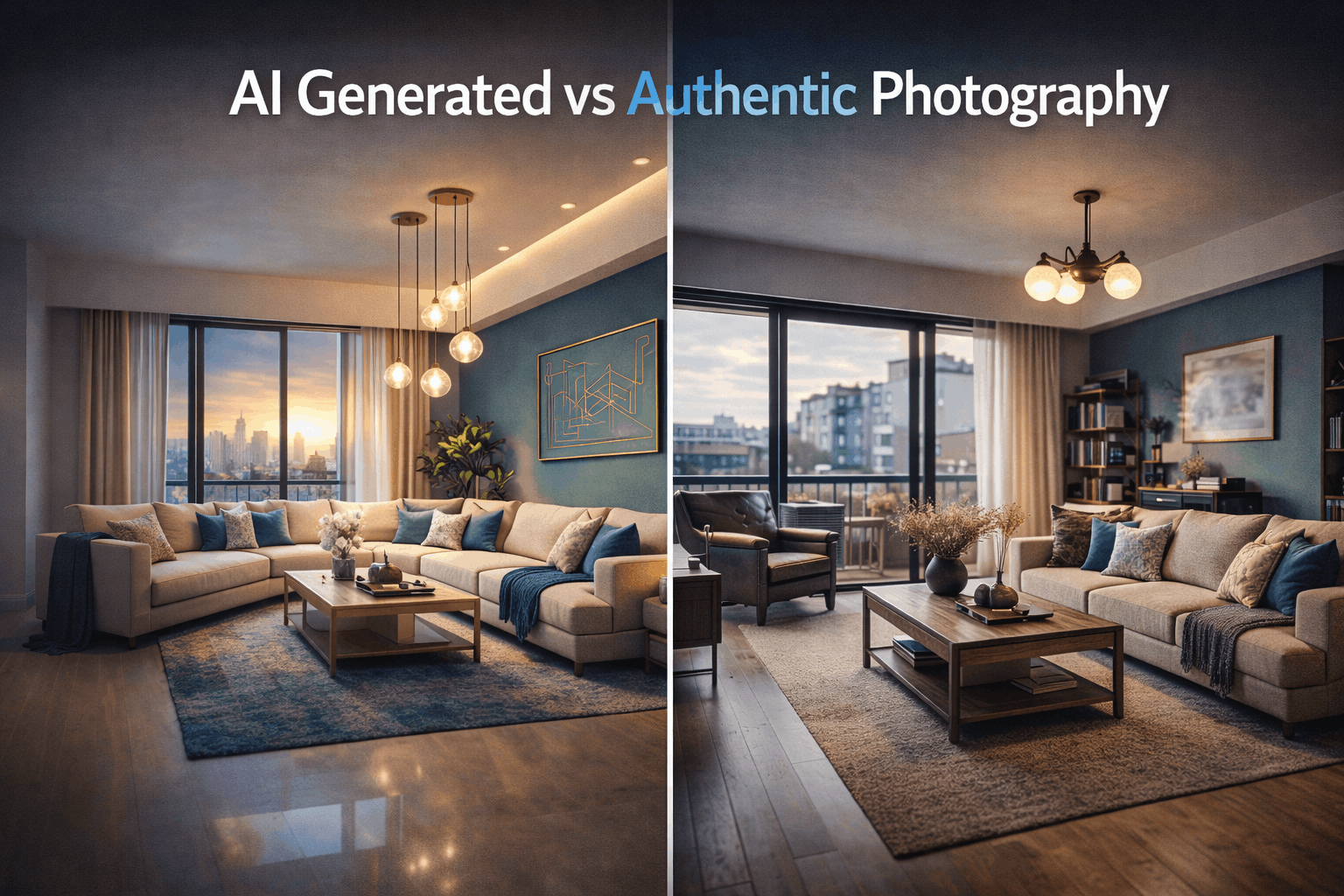
Someone just showed you an AI-generated image of what your real estate project could look like. It looks perfect. Every light is right. Every angle is beautiful. Every color is ideal. Your competition is probably doing the same thing right now. And you’re thinking about it.
Stop. This decision could destroy your business.
Let me be blunt: real estate developers using deepfakes and AI-generated images in 2026 are playing with fire. Not because the technology is impressive. Because buyers know. They’re getting smarter about detecting fake images. They’re suspicious of perfection. And when they discover you sold them a dream based on AI fantasy, your reputation dies.
This isn’t about being ethical. This is about business survival. Authentic images beat deepfakes every single time. Not sometimes. Every time. And the real estate developers who understand this will dominate 2026 while those chasing AI shortcuts face lawsuits and destroyed reputations.
Real Estate Developers Face a Critical Trust Problem in 2026
Your buyers are skeptical. Really skeptical. They’ve seen deepfakes. They’ve heard stories about AI generated images that fooled people. They’ve read about property scams. They’re looking at your images wondering if they’re real.
The impact of AI and deepfakes on social media real estate marketing is already massive. Fake before and after images are floating around showing renovations that never happened. AI generated renderings are being passed off as actual properties. Deepfake videos are showing properties in perfect condition when they’re actually falling apart. Buyers are getting angry. They’re demanding proof that images are authentic.
When a buyer sees a stunning image of a property, their first thought isn’t always to wonder anymore. It’s often a suspicion. Is this real? Is this AI? Did they use filters? This skepticism is costing real estate developers deals. Projects that should have sold out are moving slowly because buyers don’t trust what they’re seeing.
The statistics are clear. Buyers who discover fake images lose trust not just in that property, but in the entire developer. One fake image can sink your reputation for years. One deepfake video can trigger legal investigations. One AI generated rendering passed off as real can result in lawsuits that cost millions.
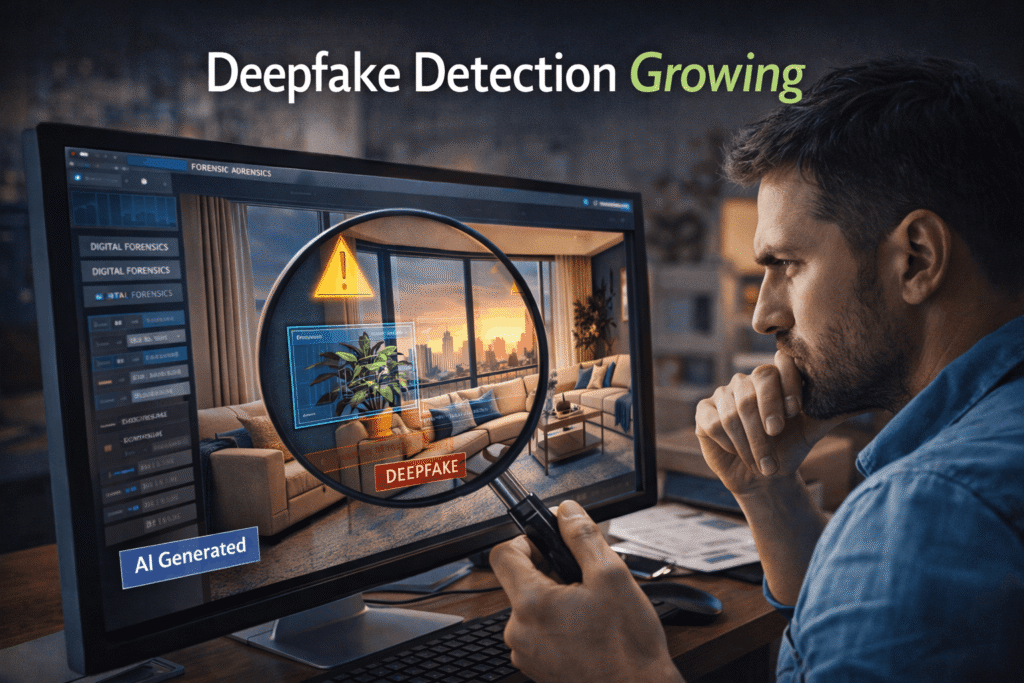
Buyers and investigators are increasingly using technology to detect AI generated and deepfake images in real estate marketing, catching dishonest developers.
Understanding AI Photography vs Authentic Photography
Let me explain what we’re actually dealing with here.
AI generated photography creates images that never happened. The technology is getting scary good at this. It can generate a property interior that looks completely real but was never actually built or photographed. It can enhance images so heavily that they become essentially fake. It can create deepfake videos of property walkthroughs of spaces that don’t exist.
Real professional photography captures what actually exists. A photographer shows up with professional equipment. They light the space properly. They frame shots to show the property in the best honest light. They photograph what’s actually there. The image might be beautifully shot, but it’s real.
Here’s the critical difference: authentic photography shows reality in a way that enhances it well. AI photography creates enhanced fantasy. The pros and cons of AI in photography are clear, sure. But for real estate, there’s really only one con that matters. It’s not real.
Buyers can tell. Seriously. When they show up to see a property in person, and it looks nothing like the images, they know something is wrong. If the colors are different, if the space is smaller, if the light is different, if the finishes aren’t as nice, they feel deceived. That feeling turns into anger. That anger turns into cancelled deals or legal action.
The Real Consequences When Real Estate Developers Use Fake Images
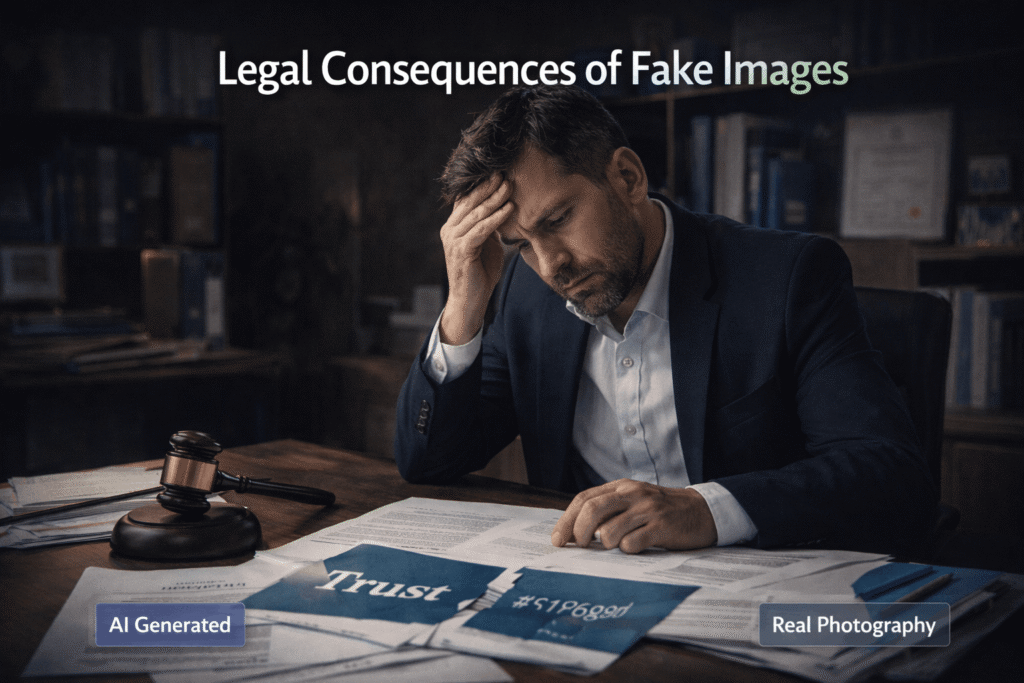
Real estate developers caught using deepfakes and fake images face serious legal consequences including fraud lawsuits, reputation damage, and financial penalties.
Let’s talk about what happens when you get caught.
Legal risk is real. If you sell someone a property based on images that are AI generated or significantly altered and you didn’t disclose that, you’re exposing yourself to lawsuits. Fraud lawsuits specifically. Lawsuits where you could lose not just the sale, but much more. Lawsuits where the courts decide you deliberately misrepresented the property.
Reputation damage is worse. One scandal involving fake images spreads through the industry quickly. Real estate agents talk. Buyers talk. Social media spreads the story. Years later, people still remember that you used AI deepfakes to sell properties. That memory follows you forever. Future buyers search for you and find articles about your fraud. Future projects fail because nobody trusts you.
The market impact is brutal. When authentic buyers discover fake images, they demand discounts on similar properties from the same developer. Market prices drop. Buyer interest drops. Projects that should have been successful fail. Waiting lists that should have been long have become nonexistent.
Why Authentic Images Still Win Every Single Time
Here’s what’s actually happening in the market right now: developers using professional photography are outselling developers using AI shortcuts. Not marginally. By huge margins. Because buyers feel the difference.
When someone walks through authentic images of a property, they’re seeing it through a photographer’s honest eye. The photographer makes it look as good as honestly possible. The light is real. The space is real. The quality is real. When buyers see the property in person, it meets or exceeds their expectations because they knew what they were getting.
When someone walks through AI enhanced or deepfake images, they’re seeing fantasy. When they see the property in person, they’re disappointed. That disappointment becomes resentment. That resentment can turn into a bad review, a cancelled deal, or a lawsuit.
The psychology is simple. People want to believe what they’re seeing. But they also want to trust who’s showing it to them. Deepfakes break that trust. Authentic photography builds it. A real estate developer with a reputation for honest, beautifully shot, authentic images gets more inquiries and closes more deals than a developer known for AI generated marketing.
How AI Photography is Being Used to Deceive in Real Estate
The deception is already happening. Not in the future. Right now.
Some developers are creating before and after images where the before is real, but the after is AI generated. They’re showing a property transformation that never actually happened. Buyers see the before and after, imagine their own property looking like the after, and make a purchase decision based on a fake image.
Architectural renderings are being passed off as actual property photos. A buyer sees what they think is the finished product. It’s actually just a computer generated image. The actual property will look different. The materials will be different. The light will be different. The colors might be different.
Some images are so heavily enhanced with AI tools that they’re essentially fake, yet still technically photographic. The sky is artificially enhanced. The colors are boosted to unrealistic levels. The lighting is digitally added to make spaces look bigger and brighter. The image shows what the property could look like under perfect conditions with professional lighting, not what it actually looks like in real life.
Buyers are increasingly demanding greater transparency about image enhancement and AI use. Smart developers are getting ahead of this by clearly labeling which images are renderings, which are AI enhanced, and which are authentic photography. This transparency actually builds more trust than trying to hide it.
Best Practices for Real Estate Developers Using Authentic Content
If you want to compete in 2026, professional photography is essential. Not optional. Essential. Quality authentic photography shows your property honestly in the best possible light. It builds credibility. It gets more inquiries. It closes more deals.
Use professional real estate photographers who understand lighting, composition, and staging. They know how to show spaces to their best advantage while keeping everything honest. This costs more upfront than using AI shortcuts, but the return is massive.
Be transparent about any enhancement or rendering. If you’re showing AI renderings of a future state, say so clearly. If you’re showing heavy enhancement, mention it. If you’re showing professional staging that won’t be in the final product, be honest about that. Transparency builds trust. Deception destroys it.
Build your content strategy around authenticity as your competitive advantage. Let your reputation be built on honest, beautiful imagery. This sets you apart from competitors cutting corners with AI fakes.
Real Examples of Deepfakes Causing Real Estate Disasters
Multiple high profile developers have faced lawsuits over fake images. One major project showed AI generated interiors that looked nothing like what buyers actually received. Another developer’s deepfake video walkthrough didn’t match the actual property at all. These cases resulted in legal settlements, reputation damage, and years of dealing with angry buyers.
Market changes have occurred, with entire neighborhoods losing buyer trust after fake images were discovered. Property values remained depressed for years because buyers no longer believed the marketing.
These aren’t ancient history. These are recent cases from 2024 and 2025. This is happening now. And the backlash is only getting stronger.
How Technology Can Detect AI Photography and Deepfakes
Tools exist now that can identify AI generated or heavily manipulated images. Buyers are starting to use these tools. Inspectors use them. Lawyers use them. As detection technology gets better, fake images become harder to hide.
This means that using deepfakes or heavy AI manipulation isn’t just unethical. It’s getting riskier from a business perspective. Detection is improving. Consequences are getting harsher. The odds of getting caught are going up.
The Business Case for Authenticity Over AI Shortcuts
Professional photography costs money. Real estate development photography might run 5,000 to 20,000 rupees, depending on complexity. That’s an investment.
But consider the cost of a single lawsuit. Fraud litigation in real estate costs at least hundreds of thousands of rupees. Reputation damage that costs you future projects? That could be worth millions in lost business. One scandal can destroy years of brand building.
Authentic photography that closes deals faster and at better prices pays for itself immediately. Projects that sell out in weeks instead of months because buyers trust the imagery? That’s ROI. That’s a competitive advantage. That’s business growth.
Frequently Asked Questions About AI Photography in Real Estate
Is it legal to use AI generated images in real estate marketing? Only if you clearly disclose that they’re AI generated. Passing them off as real is fraud.
How can buyers tell if images are AI generated? Increasingly well. Detection tools are getting better every month.
Should I use professional photography or AI images? Professional photography. Every time. The ROI is better and the risk is zero.
What about renderings for future projects? Fine, but clearly label them as renderings, not real photos.
Will deepfakes and AI photos ever be acceptable in real estate? Only when fully transparent. The market is moving toward demanding authenticity.
Your Competitive Edge: Choose Authenticity Today

Real estate developers who choose authentic professional photography over AI shortcuts gain competitive advantage, build stronger buyer relationships, and achieve greater business success.
Here’s what’s happening right now: some real estate developers are racing toward AI shortcuts. Some are investing in professional authentic photography. The ones choosing authenticity will dominate the market in 2026 while the ones chasing AI fakes face increasing skepticism and legal risk.
This is your moment to decide. You can compete on authenticity and build lasting trust with buyers. Or you can chase AI shortcuts and risk your entire reputation on technology that’s getting easier to detect and harder to defend.
Professional photography services like corporate video production and property photography aren’t expenses. They’re investments in your credibility. Real estate videography that shows actual properties honestly builds the foundation for long term business success.
The developers winning in 2026 will be the ones buyers trust. Trust comes from authenticity. Authenticity comes from real photography of real properties shown honestly and beautifully.
Make your choice. Choose authenticity. Your future depends on it.