
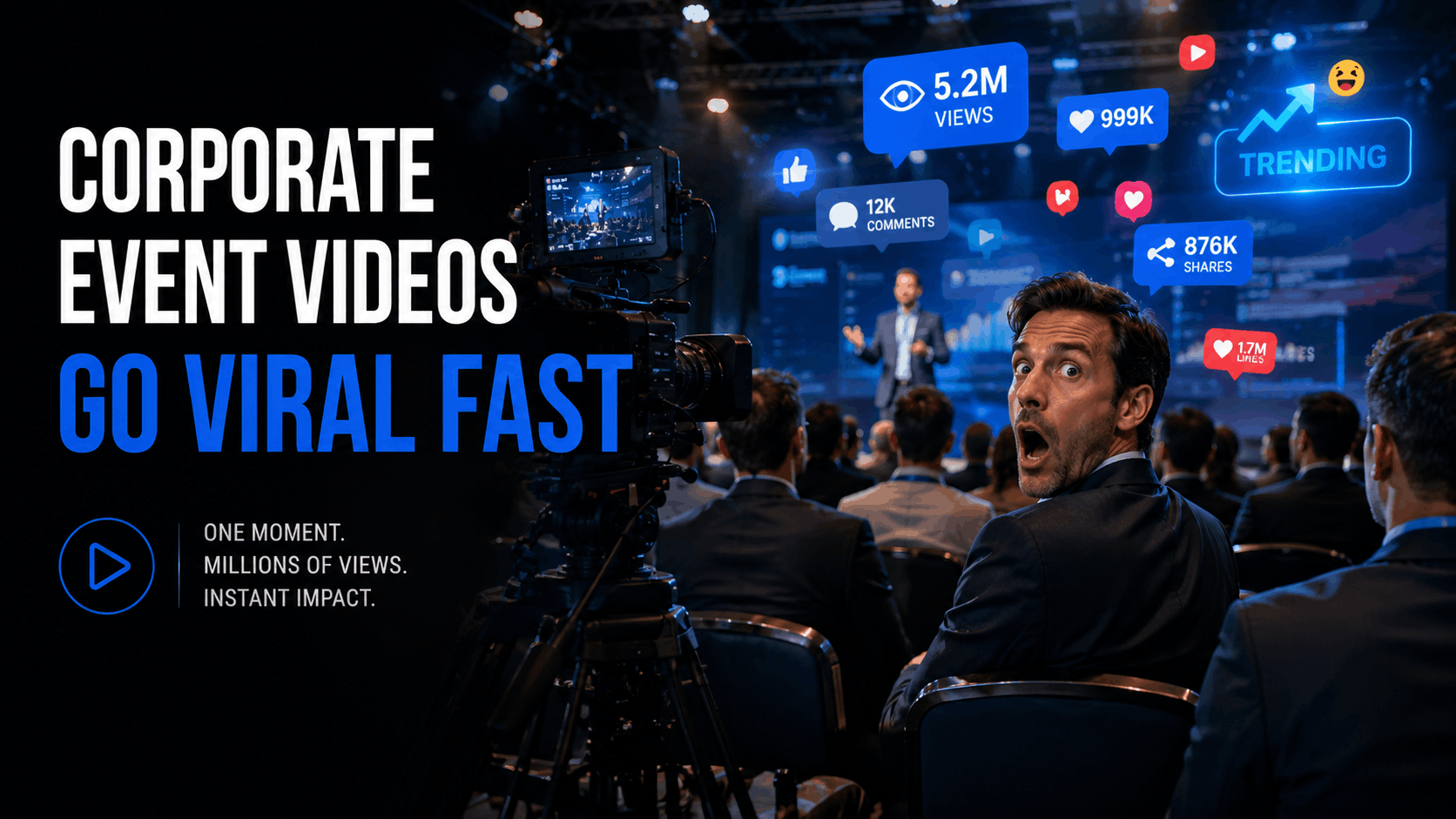
Your company conference video just hit 5 million views overnight. Not because of your CEO’s keynote. Because an attendee in the background made a hilarious reaction face that TikTok discovered and memed into oblivion.
Now that attendee is demanding you remove all footage. Your legal team is panicking. Marketing wants to capitalize on the attention. HR is fielding interview requests. Nobody planned for your corporate event video to go viral for completely unintended reasons.
This exact scenario happens weekly in 2026. Corporate events captured on video contain hundreds of people who never expected internet fame. When clips go viral unexpectedly, the legal, ethical, and business implications get complicated fast.
What Actually Happens When Corporate Event Videos Go Viral
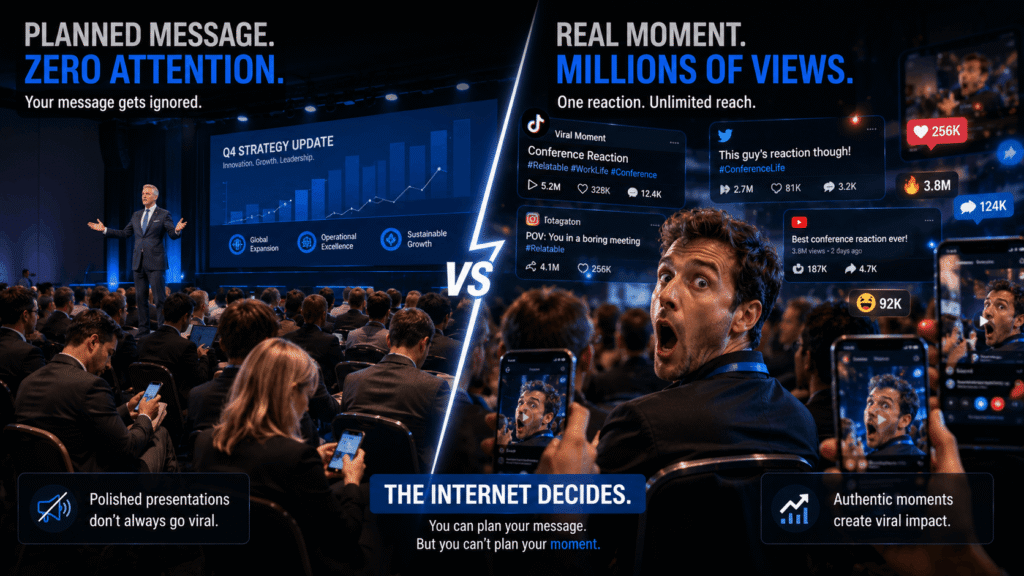
Corporate polish disappears instantly when authentic moments become viral memes online.
One moment your internal conference video sits on your company portal. The next moment, a 15-second clip circulates across every social platform racking up millions of views and shares.
The viral element is rarely what you intended. Your carefully crafted product announcement gets ignored. The attendee checking their phone during a boring presentation becomes the meme. Context disappears. Internet adds its own narrative.
Suddenly you’re managing crisis PR, legal threats, consent disputes, and media requests simultaneously. All because someone filmed something that happened to include people who never consented to internet celebrity.
Understanding Corporate Event Video Rights Basics
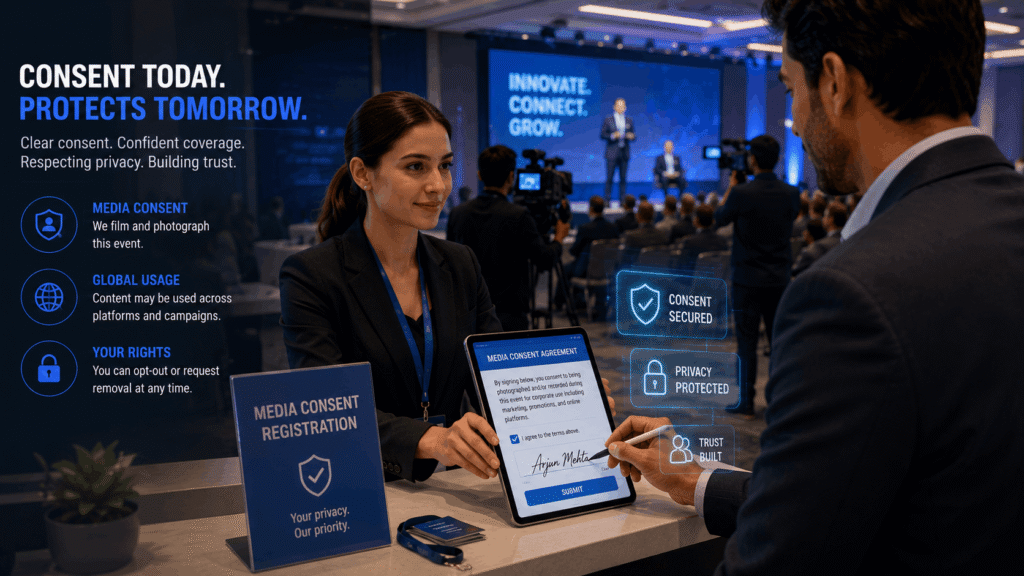
A modern legal-tech corporate environment highlighting attendee media consent systems at business conferences. The image emphasizes privacy, transparency, and professional event management in the digital age.
When you film corporate events, you’re capturing people who attended for business purposes not entertainment. Their presence does not automatically grant you unlimited usage rights for their image or voice.
Event tickets or registration forms should include clear language about filming and potential usage. Many companies skip this step assuming implied consent. This assumption creates nightmare scenarios when videos go viral.
Professional corporate video production and photography services understand consent documentation requirements protecting both companies and attendees legally.
Why Corporate Videos Randomly Go Viral
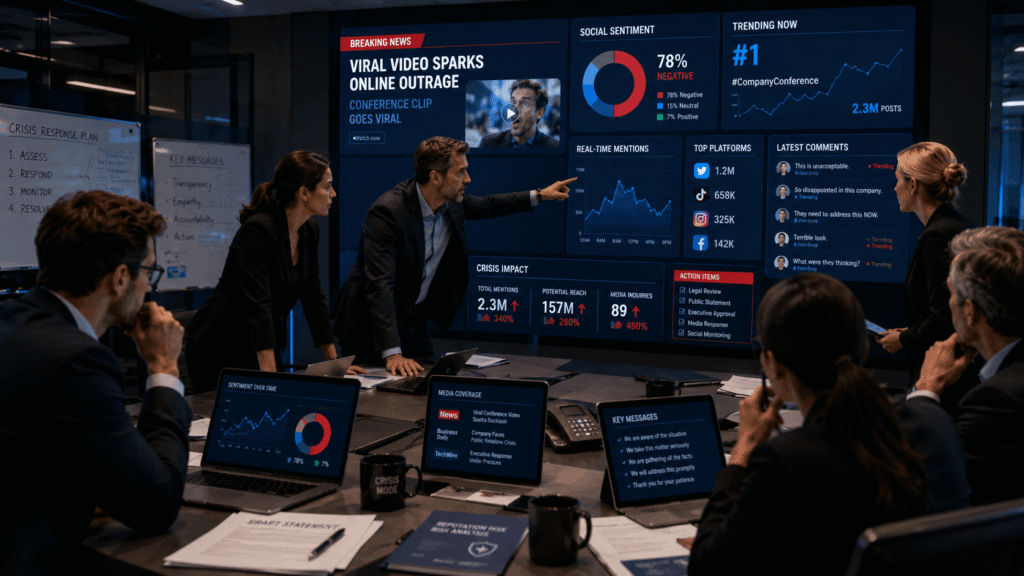
A tense corporate war room scene where PR executives, legal advisors, and marketing leaders respond to a viral conference incident. Large analytics dashboards display audience sentiment and social media trends in real time.
Corporate content goes viral when human moments break through corporate polish. Authentic reactions. Unexpected fails. Background chaos nobody noticed during editing. The internet loves finding humanity in corporate settings.
Algorithm randomness plays huge role. Your video existing somewhere online for months suddenly gets discovered by right person who shares it. Timing, trends, and pure luck determine what catches fire.
Sometimes viral spread happens maliciously. Disgruntled employees or competitors amplify embarrassing moments intentionally. What seemed like minor blooper becomes weaponized content damaging reputations or brands.
What To Do When Your Corporate Event Video Goes Viral
First 24 hours matter enormously. How you respond sets tone for everything that follows. Panic deletions often backfire worse than thoughtful acknowledgment. The internet never forgets deleted content anyway.
Assess immediately whether viral content is positive, neutral, or damaging. Positive virality is marketing gold. Negative virality requires damage control. Neutral requires monitoring before deciding action.
Contact affected individuals quickly and respectfully. They’re discovering their unexpected fame simultaneously. Your proactive communication shows consideration and may prevent legal escalation.
Video Consent and Usage Rights Protection
Comprehensive release forms signed at registration solve most problems before they start. Language must cover broad usage scenarios including unexpected virality and social media distribution.
Verbal consent on camera at event start creates documented proof. “This event is being filmed for company use and may be shared publicly” clearly stated and captured on video strengthens legal position.
Opt-out procedures must exist. Some attendees have legitimate reasons to avoid footage. Providing designated non-filming areas or easy removal request processes demonstrates good faith compliance.
Professional services handle documentation properly. Videography services specializing in corporate events include proper consent workflows protecting all parties legally.
Legal Obligations When Attendees Demand Removal
GDPR and privacy laws complicate removal requests significantly. In Europe, individuals have “right to be forgotten” requiring you to remove footage upon request in many circumstances.
US laws are less clear creating state-by-state variations. California’s strict privacy laws differ from Texas’s permissive stance. Your corporate event location determines legal obligations substantially.
Employment relationships add complexity. Employee footage at company events exists in legal gray area between personal privacy and company property rights. Court rulings vary wildly depending on specifics.
What Companies Can Do if Negative Video Goes Viral
Never try hiding or deleting viral content. Streisand Effect guarantees attempts to suppress content amplify spread exponentially. Millions who never saw it will now seek it actively.
Respond transparently if warranted. Brief statement acknowledging situation, explaining context, outlining corrective actions. Authenticity and accountability often defuse outrage faster than corporate deflection.
Sometimes silence is best strategy. Not every viral moment deserves corporate response. Some controversies die faster when you don’t add fuel by commenting officially.
Professional crisis communication matters enormously here. Fumbling response to viral corporate event video can damage brand more than original viral content ever could.
How To Stop Video From Going Viral (You Probably Cannot)
Prevention works better than cure. Before events, implement strict filming policies. Designated photographers only. Attendee phone use restrictions in sensitive sessions. These controls limit source material.
Immediate monitoring of event hashtags and social platforms catches early spread. Quick action in first hours sometimes contains spread before exponential growth begins. Usually you’re too late.
Copyright claims can remove content from platforms but only if you own copyright. Attendee-filmed content belongs to attendee legally. Your event occurrence does not grant you ownership of their recordings.
Reality check: Once something goes viral, stopping it is nearly impossible. Content exists on thousands of devices and platforms simultaneously. Focus energy on response not elimination.
Turning Unexpected Virality Into Opportunity
Positive viral moments are marketing gifts. Lean into them strategically. Create follow-up content. Engage with memes. Show your company has personality and doesn’t take itself too seriously.
Viral attendees often become brand ambassadors if you treat them well. Negative experience with your legal team demanding takedowns creates enemies. Positive collaboration creates advocates who defend you online.
Measure actual business impact. Viral corporate event video driving traffic, leads, and positive sentiment is worth capitalizing on regardless of how unexpected or off-brand it seems initially.
Professional commercial photography and video teams can help package viral moments into strategic content maximizing positive impact while controlling narrative better.
Creating Pre-Event Consent Systems
Registration forms must include comprehensive media release language. Spell out specific usage scenarios. Social media distribution. Internal communications. Marketing materials. Third party media requests. Cover everything possible.
Signage at event entrances reinforcing recording notice. Large clear signs stating “This event is being recorded for promotional use” create additional documented notice beyond registration forms.
Designated non-recording zones for privacy-concerned attendees. Green room areas or side spaces where filming is prohibited give people legitimate opt-out without missing event.
Badge color coding identifies consent status visually. Green badges consented. Red badges declined. Videographers and photographers know instantly who can and cannot be filmed.
Post-Event Content Review and Approval
Review all footage before public distribution. Seems obvious yet rushed companies skip this step constantly. Single problematic frame can create issues professional review would catch.
Stakeholder approval from multiple departments. Legal reviews consent. HR reviews employee appearance. Marketing reviews brand messaging. Multi-layer review prevents single point of failure.
Attendee preview windows where participants can request edits before publication. 48-hour review period shows good faith and catches objections before content goes public.
Version control systems tracking exactly what content exists where. When removal requests arrive, you need to know every location of every piece of footage immediately.
Insurance and Legal Protection
Event liability insurance should include media coverage. Standard policies often exclude digital media issues. Specialized riders cover copyright disputes, privacy claims, and viral content problems.
Legal counsel review of all consent forms and procedures. Cookie-cutter templates found online miss jurisdiction-specific requirements. Proper legal review saves massive problems later.
Indemnity clauses protecting company from attendee-created content. If attendee films something problematic, your indemnity clause limits liability when they post it publicly.
Managing Attendee Expectations During Events
Clear communication at event start about recording and usage. Don’t hide cameras hoping nobody notices. Explicit notice creates informed consent and prevents surprise objections later.
Live streaming disclaimers are especially important. Live content reaches audiences immediately giving participants zero review period. Extra clear warnings required before live broadcasts.
Social media use policies for attendees. Can they post photos? Can they live stream? Can they record presentations? Spell out explicitly what’s allowed and what’s prohibited.
The Future of Corporate Event Video Rights
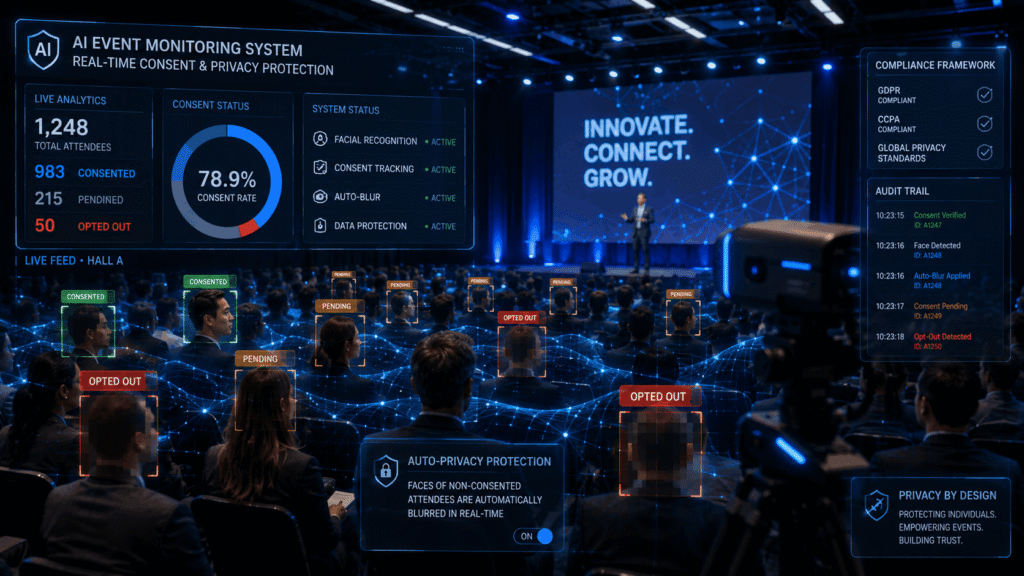
Facial recognition will automate consent tracking. Cameras will blur faces of non-consented individuals automatically in real-time. Technology will solve many current manual consent challenges.
Blockchain-based rights management will create permanent audit trails. Every piece of footage linked to specific consent records immutably. Removal requests tracked permanently for compliance proof.
AI content monitoring will alert companies instantly when corporate event video appears online unexpectedly. Automatic platform scanning catches viral spread in real-time enabling faster response.
Why Professional Corporate Event Video Services Matter
Facial recognition, AI monitoring, and automated consent systems will redefine event filming in the future
DIY event filming misses crucial legal protections. Professional services include proper consent workflows, legal documentation, and post-event management systems that prevent viral disasters.
Quality production makes virality more likely for right reasons. Professional corporate video production creates content worth sharing intentionally not accidentally through embarrassing amateur mistakes.
Insurance and liability transfers. Reputable services carry insurance protecting clients when things go wrong. Their policies become your protection when attendees threaten legal action.
Frequently Asked Questions
What to do when corporate event video goes viral? Assess impact quickly – positive, neutral, or negative. Contact affected individuals proactively. Document all consent you have. Consult legal counsel before removal decisions. Respond transparently if needed or stay silent if better strategy.
What can companies do if negative event video goes viral? Never try deleting or hiding viral content. Issue transparent statement if appropriate. Explain context. Outline corrective actions. Sometimes silence is best. Engage professional crisis communication help for serious situations.
How to stop corporate event video from going viral? Prevention through strict filming policies works best. Monitoring early spread sometimes contains it. Copyright claims work only if you own copyright. Reality: stopping truly viral content is nearly impossible once spread begins.
Why do some corporate event videos randomly go viral? Authentic human moments break through corporate polish. Algorithm luck and timing matter. Background chaos nobody noticed during editing. Internet discovers humanity in corporate settings and amplifies it.
Are attendee removal requests legally binding? Depends on jurisdiction and consent signed. GDPR gives Europeans “right to be forgotten.” US laws vary by state. Employment relationships create additional complexity. Consult legal counsel for specific situations.