
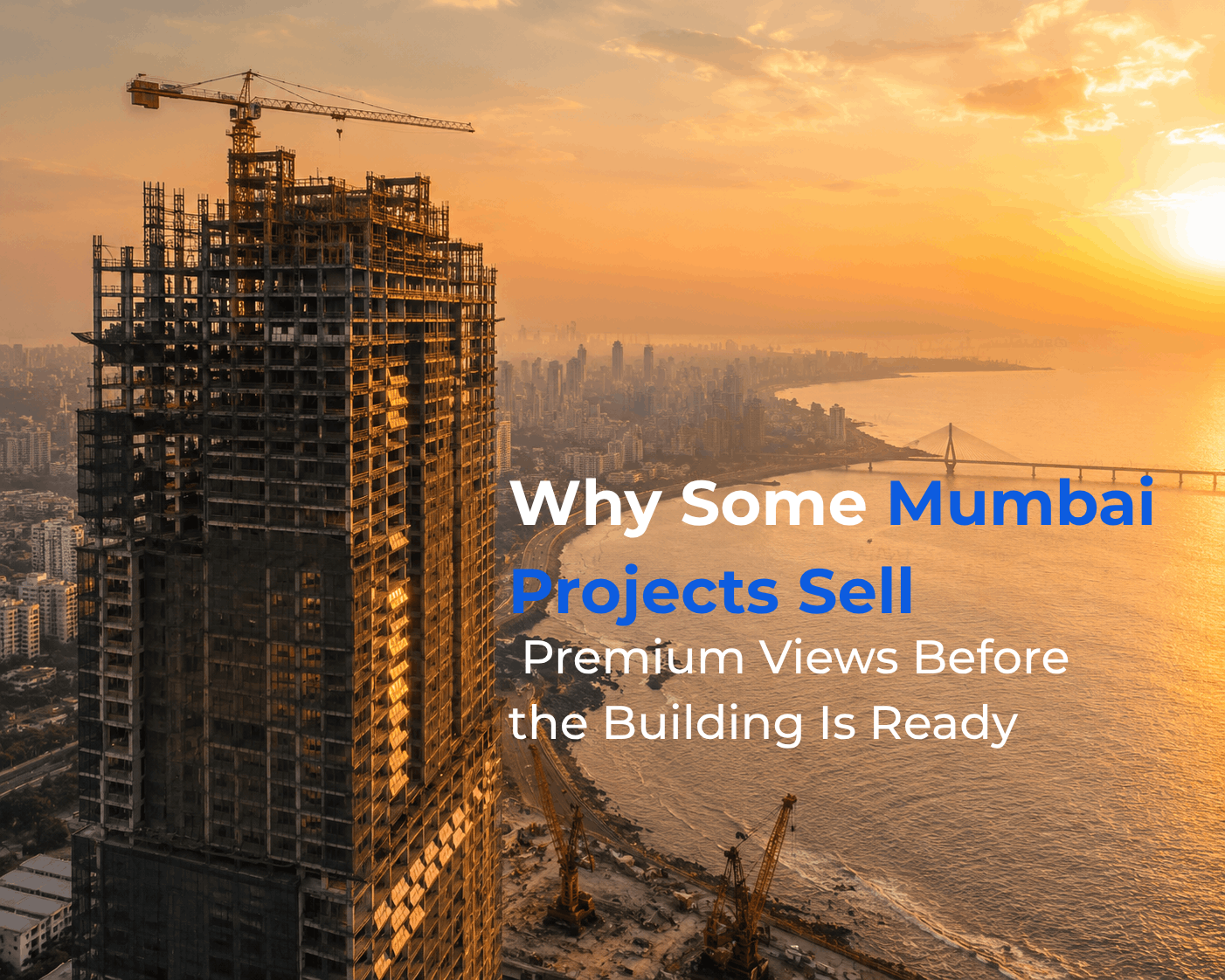
By the Cinematic 360 Editorial Team · Mumbai, India
Arjun had never planned to spend ₹4.2 crore on something he could not touch.
The project site in Worli was a rectangular pit with construction cranes at its edges. There was no lobby to walk through, no view to stand in front of, no balcony to imagine himself on. There was just cleared earth, temporary fencing, and a QR code on a hoarding.
He scanned the QR code. Watched a three-minute film. Booked two days later.
The apartment would not be ready for 36 months.
” He did not buy an apartment. He bought the version of himself who would live there. “
Quick Answer — How Do Mumbai Projects Sell Before Completion?
Mumbai’s most successful under-construction luxury projects use a combination of real estate marketing strategies that sell emotion, lifestyle, and location before a single habitable space exists. The tools: cinematic drone videography, photorealistic 3D property visualization, property brand films, Matterport walkthroughs, and digital-first campaigns targeting HNI and NRI buyers. Projects that invest in professional visual content typically achieve faster pre-launch sell-through rates, lower cost-per-inquiry, and stronger pricing power than those relying on standard floor plan marketing.
The Problem with Selling Something That Doesn’t Exist Yet
Every under-construction property sale is fundamentally an act of trust.
A buyer is being asked to commit a significant sum — sometimes their life savings, sometimes a strategic investment — on a promise. A registered project number. An architectural plan. A developer’s track record.
In markets where competition is fierce and buyer sophistication is high, trust alone is not sufficient. Buyers in Mumbai’s luxury segment can choose between dozens of comparable projects in Worli, BKC, Bandra, and Powai. They have options. They are not desperate.
This means the developer’s first job — before price, before features, before negotiations — is to make the buyer feel the project. To make them believe, viscerally and emotionally, that this is where their future belongs.
That is a visual problem. And it requires a visual solution.
What Buyers Can’t See, They Have to Be Shown
Standard real estate marketing answers the rational mind: floor plan, area in square feet, price per square foot, possession date. This information is necessary. It is not sufficient.
The emotional mind — the one that actually drives purchase decisions — needs to see light entering a room it doesn’t exist yet. It needs to feel the height of a ceiling that hasn’t been poured. It needs to experience the view from a floor that’s currently just a line on an architect’s drawing.
This is the gap that professional real estate marketing strategies are designed to close.
The Visual Arsenal of Mumbai’s Top Pre-Launch Campaigns
The best-performing under-construction project launches in Mumbai share a common pattern. They don’t just announce a project — they present a fully-realised world that the buyer can inhabit in their imagination before they inhabit it in real life.
1. Cinematic Drone Videography: Selling Location Before Location Exists
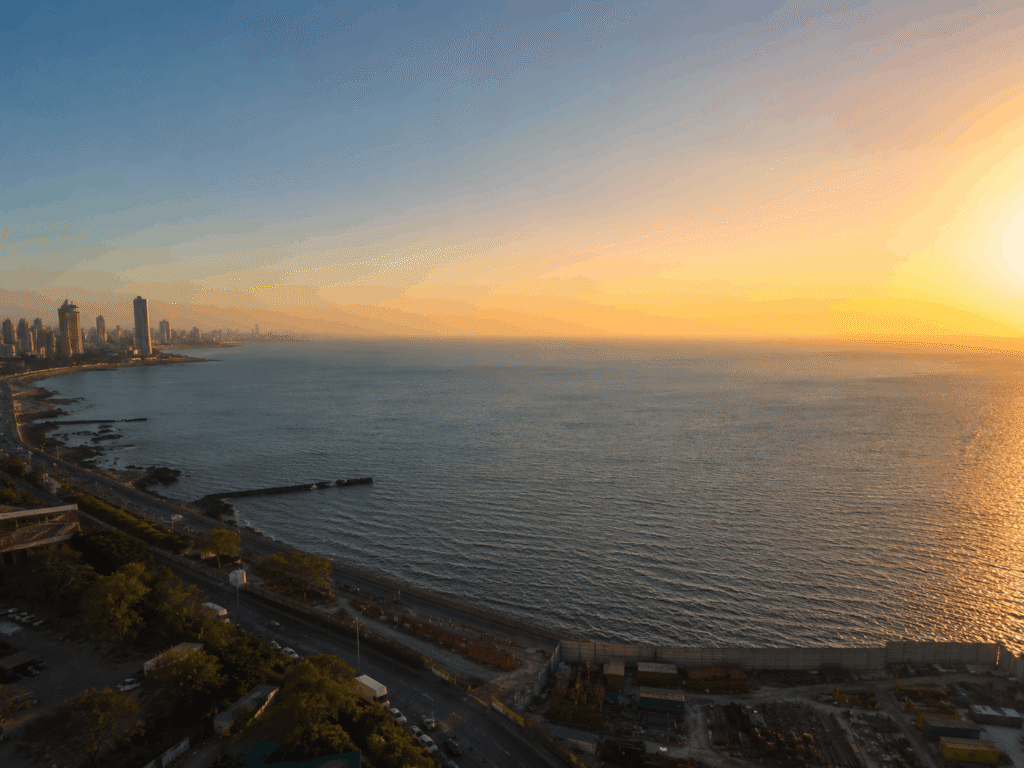
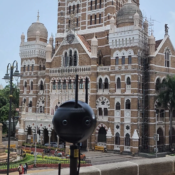
Capturing the scale, ambition, and future potential of Mumbai’s luxury real estate market.
Location is the premium in Mumbai real estate. A sea view from the 30th floor. A sunrise over the harbour. Green lung proximity in a concrete city. These are the reasons buyers pay more.
But when a building doesn’t exist yet, how do you show a buyer their view?
Real estate drone videography answers this precisely. By flying at the exact altitude and compass bearing of each floor’s orientation, a skilled drone operator can show a buyer exactly what they will see when they stand at their future window. Not an approximation. The actual view — complete with golden-hour light, the city’s rhythm, the water if it’s there.
This single piece of content has closed more pre-launch sales in Mumbai than any floor plan ever has.
2. Photorealistic 3D Property Visualization: Making the Unbuilt Real
3D visualization has evolved from diagrammatic CGI renders to something barely distinguishable from photography.
Modern property visualization studios can create images of a completed apartment — light pouring in at 4pm, specific furniture, the texture of a marble countertop — that feel more real than reality. Buyers looking at a photorealistic 3D render are looking at a prediction so precise that it functions as a promise.
When these renders are paired with accurate floor plans, correct ceiling heights, and verified view data from the drone footage, they become the most powerful trust-building tool in a developer’s pre-launch kit.
3. Real Estate Brand Films: Emotion That Earns Attention
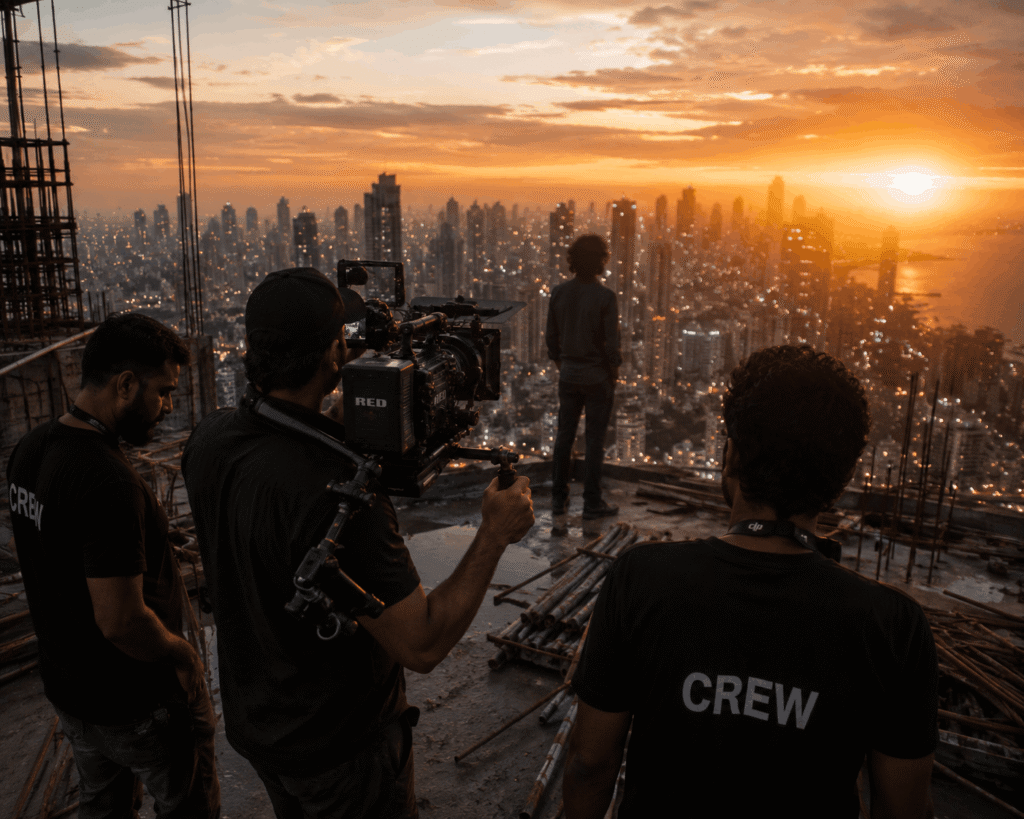
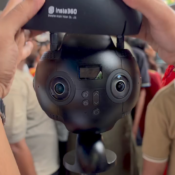
Professional video production team filming a luxury real estate project in Mumbai and an NRI buyer exploring a virtual apartment tour on a laptop.
A three-minute brand film for a pre-launch Mumbai project is not a property video. It is a short film about a life.
The best real estate video production studios understand that buyers of luxury under-construction properties are not buying rooms. They are buying a future identity. A brand film shows that future. Not in a generic aspirational way — but specifically: this building, this location, this type of life.
The film might begin with an aerial shot of Worli at dawn, move through a 3D visualization of the lobby, shift to a real couple having coffee on a balcony that exists in a show unit somewhere, and end with a sunset view captured by drone from the exact height of the penthouse floor.
Done well, it creates a feeling that no show flat visit can replicate — because it presents the project at its ideal, not at a construction-phase compromise.
4. Matterport Virtual Tours: The Test Drive for an Off-Plan Property
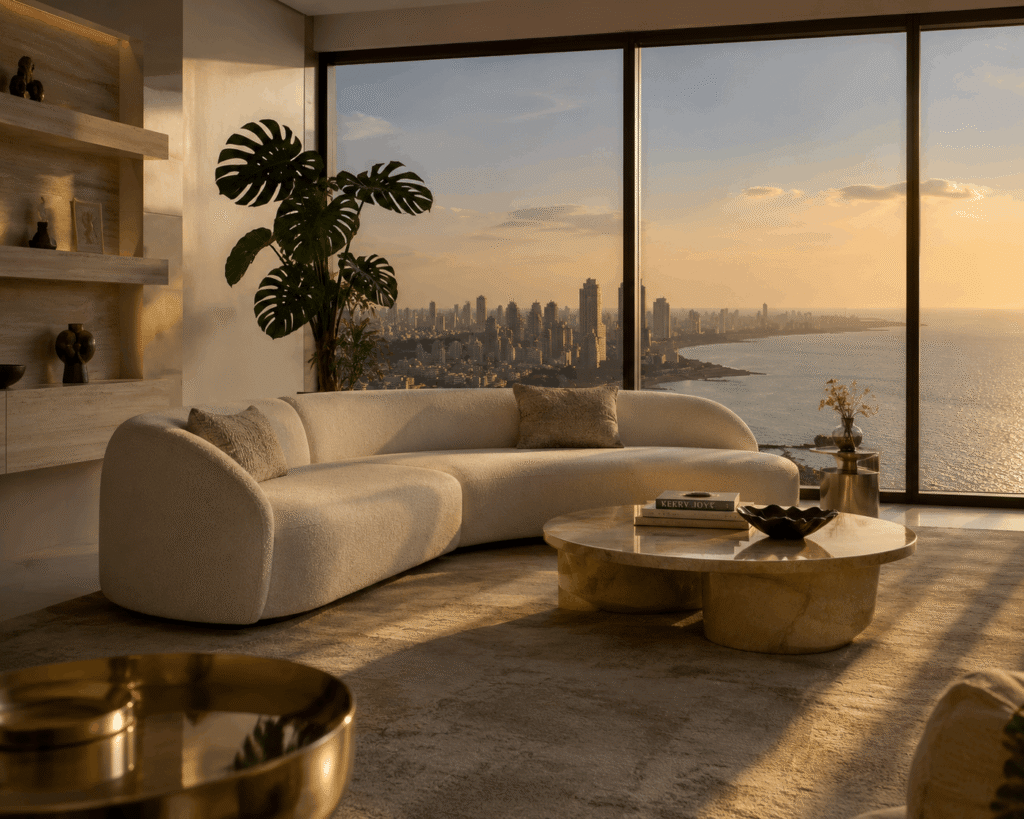
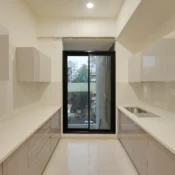
A premium living space designed to blend luxury interiors with breathtaking sea-facing views.
For NRI buyers deciding from London, Dubai, or Singapore, a Matterport 3D walkthrough of the show flat or sample apartment is the equivalent of a site visit.
They navigate through every room at their own pace. They test the ceiling height against their own sense of scale. They look out the windows — real ones, in the sample unit — and feel the proportions.
Crucially, they do this on their own schedule. Not during a developer’s presentation. Not under sales pressure. In their own space, at midnight, when the contemplative buying mood actually arrives.
” The project that is available when the buyer is ready will always beat the project that requires them to be available when you are ready. “
The Real Estate Marketing Strategies Behind Mumbai’s Fastest Pre-Launch Sell-Throughs
Beyond individual content pieces, Mumbai’s most successful under-construction sales campaigns share a strategic framework.
▸ Lead with location, prove it with drone — The first content a potential buyer sees should establish why this specific spot in Mumbai commands a premium. Drone footage does this in 30 seconds.
▸ Make the unbuilt feel inevitable — Through 3D visualization and brand films, present the completed project with such confidence and detail that the only question is not whether the building will be as described — but whether the buyer wants to be part of it.
▸ Build a pre-launch audience before the campaign — Mumbai’s top developers create private preview lists months before public launch. Digital content — short-form aerial clips on Instagram, 3D render reveals, architect interviews — builds anticipation among qualified buyers before they’re asked to commit.
▸ Remove the distance barrier for NRI buyers — A Matterport walkthrough, a 4K brand film, and a drone view of the location eliminate the ‘I can’t visit in person’ objection for NRI buyers. In a city where NRI investment is significant, this is a strategic imperative.
▸ Use RERA registration as a credibility anchor — Sophisticated visual content paired with MahaRERA registration creates a complete trust signal — emotional desire backed by legal protection.
A Real-World Pattern: What High-Performing Launches Look Like
Across multiple under-construction project launches in Mumbai — from luxury towers in Worli to boutique residential developments in Bandra West — a consistent pattern emerges in the campaigns that sell out early.
Phase 1 (3–6 months before launch): Teaser drone footage of the location. Aerial reveals of the neighbourhood. No pricing, no floor plans — just location beauty and implied exclusivity.
Phase 2 (1–2 months before launch): Photorealistic 3D renders released in sequence. Each render reveals a new aspect of the project — lobby, living room, view terrace, master suite. Each creates a social media moment.
Phase 3 (launch week): Full brand film released across all platforms. Matterport walkthrough goes live. Digital campaign targets NRI and HNI audiences in key overseas markets. A waiting list that already exists converts to bookings.
The formula is not magic. It is the consistent application of professional visual content at each stage of the buyer’s emotional journey — from awareness to desire to decision.
The Future: AI, Personalisation, and the Next Frontier
The under-construction marketing landscape in India is approaching its next significant shift.
▸ AI-generated personalized renders — where buyers see their furniture, their art, and their preferred interior style inside a 3D visualization of the actual apartment they’re considering
▸ Interactive virtual environments — allowing HNI buyers to ‘walk through’ a photorealistic version of the completed project in VR — months before possession
▸ Live drone integration — with real-time streaming of construction progress to buyer dashboards, building ongoing trust throughout the build period
▸ Short-form vertical content — Instagram Reels and YouTube Shorts as the primary discovery layer for new projects, replacing traditional hoardings and print as first-impression media
Mumbai’s developers who master this ecosystem will not just sell units faster. They will build the kind of brand equity that makes each subsequent launch easier — because buyers already trust what they’ll see.
What to Do With This as a Developer, Builder, or Designer
Whether you are a developer planning your next pre-launch in Powai, a builder finishing a boutique 12-unit project in Andheri, or an interior designer wanting to document your work at the level it deserves — the question is the same:
Are your real estate marketing strategies as sophisticated as your project?
The home is already exceptional. The location already commands a premium. The architecture already reflects your ambition. The only question is whether the world can see that — before they walk through the door.
Or in the case of an under-construction project: before there is a door to walk through at all.
Want to make your real estate brand work look as impressive online as it does in person? Talk to Cinematic360 — professional photography, video, and virtual tours for interior designers and developers across Mumbai.
Q1. What are the best real estate marketing strategies for under-construction projects in Mumbai?
The most effective strategies combine drone videography (to establish location value), photorealistic 3D visualization (to show the completed product), real estate brand films (to sell lifestyle and identity), and Matterport virtual tours (to serve NRI and remote buyers). A phased content release — from teaser drone clips to final brand film — builds anticipation and converts pre-launch interest into bookings.
Q2. How do Mumbai developers sell properties before they are built?
Mumbai developers use a combination of RERA registration for legal credibility, photorealistic renders for visual confidence, drone footage for location storytelling, brand films for emotional desire, and digital-first campaigns targeting NRI and HNI audiences. The combination of legal security and high-quality visual content enables buyers to make purchasing decisions before possession.
Q3. What is property visualization and why is it important for under-construction projects?
Property visualization refers to photorealistic 3D CGI rendering of a property before it is built. Modern visualization creates images virtually indistinguishable from real photography — showing completed interiors, specific lighting conditions, materials, and views. For under-construction projects, it is often the primary tool that converts buyer interest into booking decisions.
Q4. How does real estate drone videography help sell under-construction projects?
Drone videography captures aerial footage at the exact altitude and orientation of each floor’s future view, showing buyers precisely what they will see from their apartment. It also communicates neighbourhood context, proximity to amenities, and location premium. For Mumbai projects where sea views, city skylines, or greenery are key selling points, drone footage is often the most persuasive single piece of content.
Q5. What should a real estate brand film include for a pre-launch luxury project?
An effective pre-launch real estate brand film should include: aerial drone footage establishing the location, photorealistic 3D visualization of key spaces, real lifestyle imagery from similar completed spaces or show units, a narrative that connects the project to a specific aspirational lifestyle, and a clear call to action. Duration: 2–4 minutes for full films, 30–60 seconds for social media cuts.