
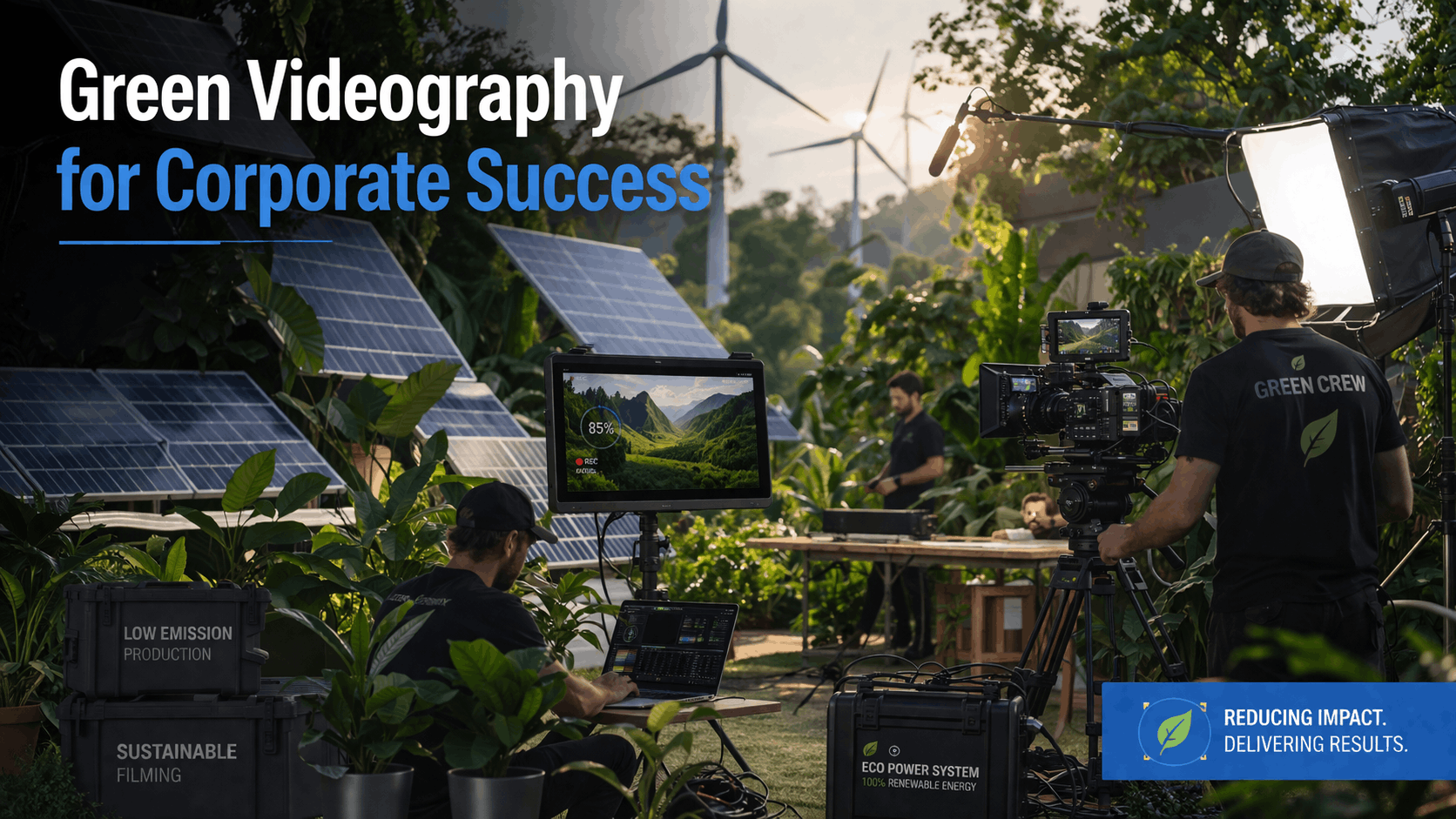
Your corporate buyer just asked a question that caught you off guard. Before approving your video production budget, they asked: ” What’s your sustainability plan? How are you going to produce this video responsibly?
A few years ago, nobody would have asked this. Now, it’s becoming standard. By 2026, it might be mandatory. Companies with serious ESG commitments are demanding green marketing practices from everyone they work with. If your video production doesn’t align with their sustainability goals, they’re hiring someone else.
This isn’t just a nice-to-have. This is business survival. Companies that understand green marketing and green videography practices are winning contracts. Companies ignoring sustainability are getting left behind. The market is shifting faster than most people realize.
To help you navigate this evolving landscape, let me explain what’s actually happening and what you need to do about it.
Green Marketing and ESG Commitments Are Now Business Requirements
Here’s the reality: large corporations have ESG commitments. Environmental, Social, and Governance. They’ve made public promises about sustainability. They’re being evaluated on whether they keep those promises. This means everyone they work with, including video production companies, needs to align with their values.
The 4 P’s of green marketing are Product, Price, Placement, and Promotion. When applied to video production, it means every aspect of how you produce video matters. The equipment you use, the locations you choose, the vendors you hire, and the way you deliver files. Everything connects to sustainability.
Corporate buyers aren’t just looking for good video anymore. They’re looking for high-quality, responsibly produced videos. A stunningly beautiful corporate video means nothing if it was produced in a way that contradicts the client’s ESG commitments. You need both quality and responsibility.
This shift is creating winners and losers. Production companies that adapted to green videography practices are getting more work from bigger clients. Companies that ignore sustainability are watching their budgets go to competitors who get it.
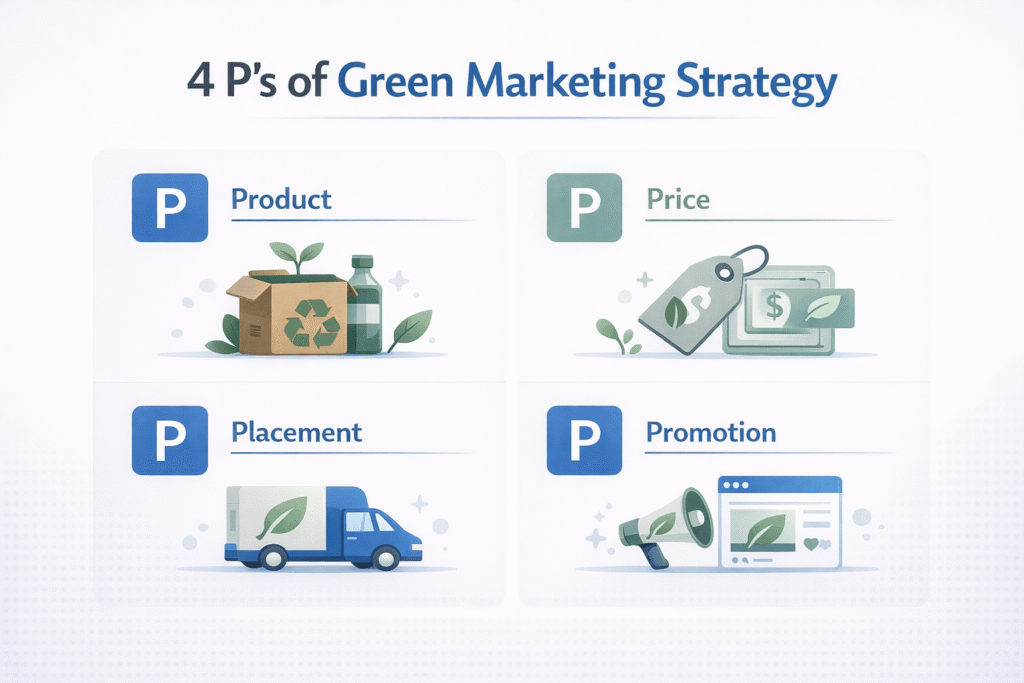
The 4 P’s of green marketing—Product, Price, Placement, and Promotion—guide sustainable video production decisions from concept through distribution.
Understanding Sustainability in Green Marketing Strategy
Let’s define what we’re actually talking about here.
Sustainability in green marketing means making choices that don’t damage the environment, both in what you produce and how you produce it. It’s about reducing waste, using renewable energy, choosing local vendors to reduce transportation, and being honest about your impact.
The 4 pillars of sustainable development are economic, social, environmental, and institutional. For green videography, this means you’re creating economic value without destroying the environment, you’re being fair to workers, you’re minimizing environmental impact, and you’re supporting systems that enable sustainability.
Here’s what matters for video production: every decision you make has sustainability implications. Do you use local talent or fly crew from another city? Do you rent equipment locally or import it? Do you shoot multiple takes of every scene or plan carefully to minimize waste? Do you use energy-efficient lights or power-hungry equipment? These choices matter.
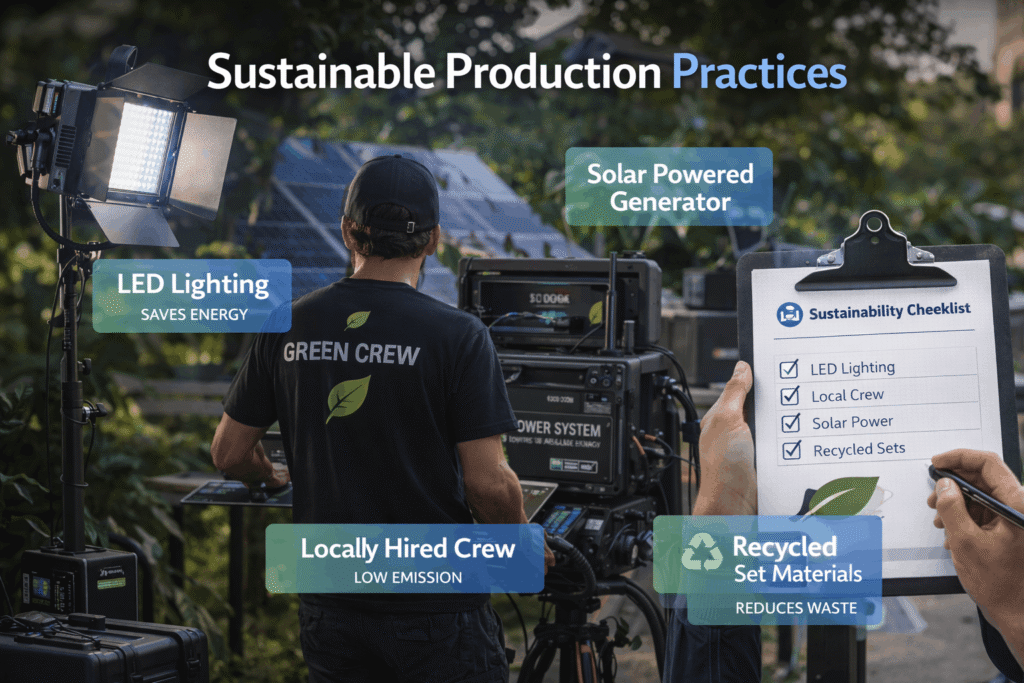
Sustainable video production incorporates LED lighting, local crew hiring, efficient equipment, and waste reduction strategies that minimize environmental footprint.
Green Videography Practices That Corporate Buyers Expect
Professional video production traditionally uses a lot of energy and resources. High-powered lighting rigs. Diesel generators on set. Flights and hotels for crew. Wasteful shooting practices with hundreds of useless takes. Corporate buyers know this, and increasingly they’re asking for better.
Eco-friendly production methods start with planning. Detailed shot lists to avoid wasted takes. LED lighting instead of traditional power-hungry lights. Careful location scouting to minimize travel. Hiring a local crew instead of bringing in expensive talent from other cities. Using public transportation instead of rental cars. These practices reduce environmental impact significantly.
Sustainable equipment choices matter. Some companies are using on-site renewable energy. Some are renting equipment locally instead of shipping it. Some are choosing locations that have good public transportation access. Small choices add up to real environmental impact.
Digital infrastructure is often overlooked, but it matters. Where are your video files stored? Cloud servers use energy. Some companies are switching to energy-efficient data centers. Some are reducing file sizes through better compression. Some are sharing storage to reduce redundancy.
The 4 R’s of Green Marketing Applied to Video Content
Reduce means using less. Shoot fewer takes. Plan better so you don’t waste footage. Use efficient equipment that does more with less energy. Reduce packaging and materials. Every item you reduce has an environmental benefit.
Reuse means getting maximum value from content. Repurpose video into multiple formats. Turn a 60-second commercial into social media clips. Turn a documentary into a podcast episode. Use music and visuals across projects instead of constantly creating new ones. This maximizes the value of what you produce.
Recycling means updating old content instead of always starting from scratch. Take a three-year-old client testimonial video and add new information. Update a product demo with new features. Give old content new life instead of throwing it away and starting over.
Refuse means saying no to unsustainable practices. Don’t accept projects from clients demanding unreasonable rushes that require wasteful production. Don’t use energy-inefficient equipment when better options exist. Don’t fly crew around the world when local talent is available. Sometimes the right choice is refusing projects that can’t be done sustainably.
Real Examples of Corporate Green Video Success
Companies that embraced green marketing video are seeing real results. Google produces its sustainability report in video format, highlighting its green practices. The video itself is produced sustainably. This builds credibility with their commitments.
Patagonia makes green marketing videos about its environmental efforts. Not just what they do, but how they do it responsibly. Their customers trust them more because the video matches their values.
Microsoft has entire video campaigns about sustainability. Their corporate videos are produced with carbon awareness. They measure and communicate their production footprint. This resonates with corporate buyers evaluating Microsoft for partnerships.
Green videography is a competitive advantage, not a cost center. It attracts clients and enhances brand value.
How Green Videography Improves Your Brand Value
When you commit to green videography practices, you’re making a statement. You’re telling clients you care about more than just profit. You care about the planet. You care about responsibility.
This attracts clients who care about the same things. Companies with real ESG commitments want to work with partners who share values. Green marketing practices open doors to larger corporate clients. These clients have bigger budgets and longer-term relationships.
Competitive advantage comes from being ahead of the curve. Most video production companies haven’t adapted yet. The ones who have are standing out. They’re winning contracts from sustainability-focused companies. They’re building reputations as responsible partners.
Long-term business growth comes from alignment with where the market is moving. In five years, green videography won’t be a differentiator. It will be table stakes. The companies that are now building sustainable practices are positioning themselves for 2030 and beyond.
Step-by-Step Guide to Green Video Production
Plan your project with sustainability in mind. Before shooting anything, think about the carbon footprint. Can you shoot locally? Can you use existing locations instead of building sets? Can you hire a local crew? Planning ahead reduces waste.
Choose green partners. Work with equipment rental companies using renewable energy. Hire production assistants from the local area. Partner with local vendors for catering and services. Your supply chain impacts your sustainability.
Measure your impact. Carbon footprint calculators for video production exist. Use them. Track how much energy your production used. Measure travel distance. Measure waste. You can’t improve what you don’t measure.
Communicate your efforts transparently. Tell clients what you did to make production sustainable. Share your carbon footprint numbers. Show what you measured and what you improved. This builds trust.
Best Practices for Authentic Green Marketing Video
Avoid greenwashing at all costs. Greenwashing is making false environmental claims. Some companies say they’re green, but they’re not. This destroys credibility when people find out the truth.
Be transparent about what you do and what you don’t do yet. You might not be perfect. That’s okay. Tell clients you’re reducing energy consumption by 50 percent but still flying some crew. That’s honest. People respect honesty more than fake perfection.
Show real impact in your videos. If you’re making a sustainability video for a client, show their actual impact. Real numbers. Real outcomes. Real commitments. This is what builds trust.
Common Mistakes Companies Make With Green Marketing Video
Fake green claims are the biggest mistake. Companies are making sustainability videos while continuing to use unsustainable production practices. This gets exposed. It damages credibility permanently.
Ignoring the business case for sustainability. Some companies think green practices are expensive. Often they’re cheaper. Local crew costs less than flying people in. LED lights use less energy, resulting in lower electricity costs. Careful planning reduces wasted takes. Sustainability and profitability often align.
Not measuring or communicating properly. Companies do sustainability work but never tell anyone about it. Why? You need to communicate your efforts, or no one will know you care.
Frequently Asked Questions About Green Videography
Is green videography more expensive? Not usually. Careful planning and local hiring often costs less than traditional wasteful practices.
How do I know if a video was produced sustainably? Ask questions. Request sustainability metrics. Real companies can provide carbon footprint data.
Does green video actually help with business? Yes. Corporate buyers increasingly demand it. It opens doors to better clients.
Can I make beautiful videos and still be sustainable? Absolutely. Quality and sustainability aren’t opposed. They often align.
What if I’m just starting? Can I be sustainable? Yes. Start somewhere. Local crew. Energy-efficient equipment. Reduce waste. Communicate honestly.
Your Green Marketing Future Starts Today
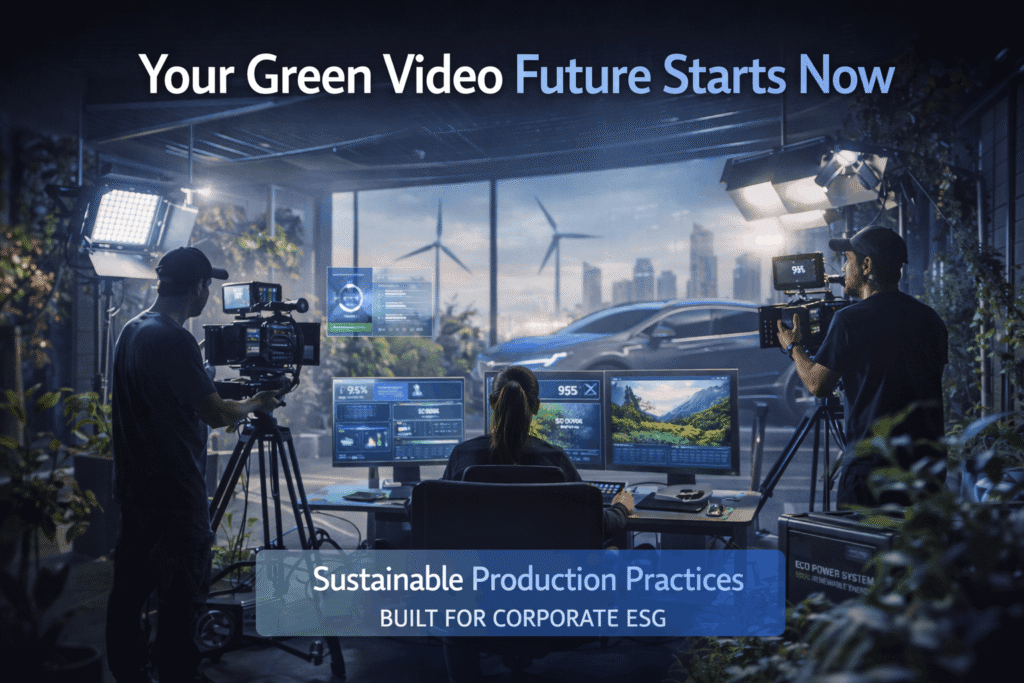
The future of videography is sustainable. Companies implementing green practices today are positioning themselves as industry leaders in 2026 and beyond.
The market is shifting toward sustainability. Corporate buyers are demanding green videography practices. The companies adapting now are winning. The companies waiting are losing.
This isn’t about being trendy. This is about alignment with where business is heading. ESG commitments are real. They’re expanding. They’re becoming requirements.
Professional green videography, combined with proper sustainability practices and honest communication, is how you build competitive advantage in 2026 and beyond. Corporate video production that aligns with client sustainability goals opens doors. It builds trust. It creates long-term partnerships.
Start implementing green videography practices today. Measure your impact. Communicate honestly. Build your reputation as a responsible partner. The future of video production is sustainable. Make sure you’re ready.