
You’re standing at a crossroads. Your real estate team needs to upgrade how you present properties. You can invest in AI rendering technology. Or you can go with 360 videos. Both are trending. Both claim to sell more properties. Both require investment. But which one actually works better?
This decision matters because a wrong choice costs you money and deals. The right choice gives you a competitive advantage. By 2026, properties without professional visualization technology will be invisible. The question isn’t whether to invest. It’s where to invest for maximum return.
Let me give you the straight answer based on actual data and real-world performance. Then you can make the right choice for your business.
Real Estate Developers Face a Critical Technology Choice in 2026
Here’s what’s happening in real estate right now: every serious developer and agent needs visualization technology. The days of static photos are over. Buyers expect to see properties in immersive formats. The question is: which format do they prefer?
To answer this properly, we need to understand what we’re comparing. Is visualization and 3D rendering the same as AI rendering? No. They’re related but different. Traditional 3D rendering is created by designers manually building models. AI rendering uses artificial intelligence to generate images automatically. They look similar to buyers, but they’re made differently.
Real estate agents and developers are genuinely confused about these technologies. Some think AI rendering and 360 videos are the same. They’re not. Some think one is clearly better. The reality is more nuanced. Technology choice impacts how fast properties sell, how much they sell for, and how qualified the buyers are.
The developers who understand these differences and choose wisely are the ones who win. The ones still thinking about it are losing deals to competitors who moved faster.

The future of videography is sustainable. Companies implementing green practices today are positioning themselves as industry leaders in 2026 and beyond.
Understanding AI Rendering Technology for Real Estate
AI rendering uses artificial intelligence to create photorealistic images of properties. You feed the AI data about a property. The AI generates images showing how the space could look. It’s fast. It’s cheap. It’s scalable.
Here’s what makes AI rendering different from traditional photography. A photographer shows you what actually exists right now. AI rendering shows you what could exist. An empty lot becomes a finished building. A bare apartment becomes a beautiful staged space. An ugly commercial property becomes something attractive.
The speed advantage is massive. Traditional rendering takes weeks. AI rendering takes hours. A property that should have launched yesterday can launch today with AI rendering. That speed means getting on the market first, capturing buyers first, and closing deals first.
The cost advantage is significant as well. Professional 3D rendering costs money. AI rendering costs far less. Multiple variations of a property can be rendered in different styles for different target markets. The economics work for projects of any size.
But here’s what AI rendering doesn’t do. It doesn’t show the actual property. Buyers know they’re seeing AI-generated images. Some buyers love this because they can visualize potential. Some buyers distrust it because it’s not real. Market preferences vary.
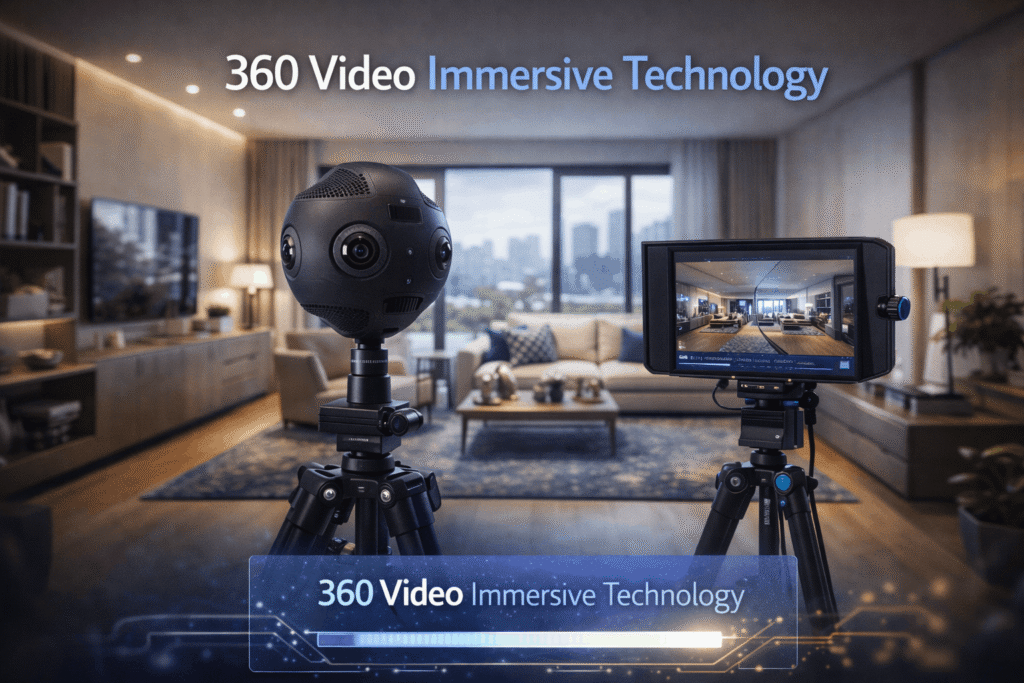
360 degree video captures the complete reality of properties with cameras recording all angles simultaneously, allowing buyers to explore actual spaces interactively.
Understanding 360 Video Technology for Property Sales
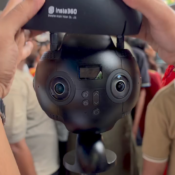
A 360-degree video is an immersive recording of an actual property. A camera captures every angle simultaneously. The result is an interactive video where buyers can look in any direction. They can zoom in. They can pan around. They experience the actual space in full reality.
360 videos differ from traditional property videos in a key way. Traditional video is linear. The filmmaker decides what you see and when you see it. A 360 video lets the viewer decide. The viewer explores the property at their own pace. They can stop and stare at something. They can rewind and look again.
The experience 360 videos provide is special. Buyers feel like they’ve actually visited the property. They understand the flow of spaces. They see the actual finishes and materials. They get a real sense of scale. Some buyers report that 360-degree videos help them make purchase decisions without visiting in person.
Buyers know 360 videos show real properties. This authenticity builds trust. Skepticism drops. The likelihood of surprises when they visit decreases. This matters for buyer satisfaction.
Comparing AI Rendering vs 360 Videos Head-to-Head
Speed matters. AI rendering gets a property marketable in days. 360 videos need the property to physically exist and be accessible. For pre-construction properties, AI rendering wins. For ready properties, 360 videos work. For properties under renovation, AI rendering is faster.
Cost comparison is clear. AI rendering costs between 10,000 and 50,000 rupees per property. 360 videos cost between 15,000 and 100,000 rupees, depending on property size and complexity. AI rendering is usually cheaper, sometimes significantly.
Buyer engagement is interesting. AI rendering gets views. People like seeing how properties could look. But 360 videos get more serious engagement. Buyers who view 360 videos are more likely to inquire. They spend more time exploring. They’re more ready to buy.
Conversion rates tell the story. Properties listed with AI rendering get inquiries faster, but conversion rates are moderate. Properties with 360 videos get fewer inquiries initially but higher conversion rates. The quality of inquiry is higher.
Could AI Take Over Real Estate Agents and Property Marketing
This is the question that scares real estate professionals. Will AI replace what we do?
AI rendering can replace some tasks. Generating images of properties, creating options for different design scenarios, and showing multiple variations quickly. These are AI strengths. But AI rendering cannot replace judgment about which properties will sell, understanding buyer psychology, negotiating deals, or building relationships. These are human strengths.
Real estate agents who understand technology and use it well will thrive. Agents who ignore technology will struggle. AI isn’t replacing agents. It’s creating a divide between agents who embrace tools and agents who don’t.
The human touch still matters hugely. A buyer looking at AI-rendered images still wants to talk to someone who understands the market. A buyer exploring a 360 video still wants professional guidance on neighborhoods and financing. Technology enhances what agents do. It doesn’t replace them.
How is AI Impacting Real Estate Technology Decisions
Markets are shifting toward technology adoption. Major developers are using AI rendering. Progressive agents are using 360 videos. Buyers are expecting at least one of these technologies. Properties without visualization are disappearing from consideration.
Properties using AI rendering are selling in different timeframes depending on the market segment. Luxury properties use AI rendering to show potential to wealthy buyers. These properties often sell faster because serious buyers make faster decisions when they see possibilities. Commercial properties use AI rendering to show tenants what future spaces will look like. Conversion is quick when the visual matches the vision.
Properties with 360 videos show strong performance across all segments. Residential properties with 360 videos spend less time on the market. Commercial properties with 360 videos get more serious inquiries. The engagement metrics are consistently strong.
Real World Examples and Case Studies
A luxury residential developer in Mumbai used AI rendering to showcase future-renovated apartments to buyers. Properties sold within weeks because buyers could visualize finished spaces before construction. Without AI rendering, sales were slower.
A middle-market residential complex used 360 videos instead. Buyers could explore actual properties, finishes, and spaces. Inquiries were fewer, but buyer satisfaction was higher. Less marketing is needed because word of mouth spreads.
A commercial property developer tested both. AI rendering for pre-leasing strategy. 360 videos for ready properties. The combination worked perfectly. Pre-leasing moved fast with AI. Post-occupancy marketing moved fast with 360 videos.
Best Practices for Choosing Your Technology
Use AI rendering when properties don’t exist yet. Unbuilt projects, heavily renovated units, and future visions. AI rendering shows possibilities. Buyers imagining futures respond well.
Use 360 videos when properties are ready or nearly ready. Existing properties, finished products, move-in ready. 360 videos show reality. Serious buyers making purchase decisions prefer seeing real spaces.
Combine both for complete coverage. AI rendering for marketing to early-stage buyers. 360 videos for marketing to ready-to-buy buyers. Use both to capture the full buyer journey.
Common Mistakes Real Estate Developers Make
Choosing technology based only on cost is a mistake. Cheaper technology that doesn’t convert is expensive. Investment should align with what actually moves your specific properties.
Ignoring buyer preference in your market is dangerous. What works in the luxury segment might not work in the middle market. Test what your actual buyers respond to.
Not measuring results is brutal. You don’t know what’s working. You’re guessing. Track which technology type generates serious inquiries. Track conversion rates. Let data guide future decisions.
Frequently Asked Questions About AI Rendering vs 360 Videos
Which sells properties faster? Depends on property type. AI rendering for new construction. 360 videos for ready properties.
Which costs less? AI rendering is usually cheaper per property.
Which converts better? 360-degree videos typically have higher conversion rates among serious buyers.
Can I use both? Yes. This is the ideal strategy for full market coverage.
Is AI rendering real or fake? It’s real technology, but it creates AI-generated images, not photography.
Will 360 videos replace agents? No. They help agents sell more effectively.
Make Your Technology Decision Today for Maximum Impact
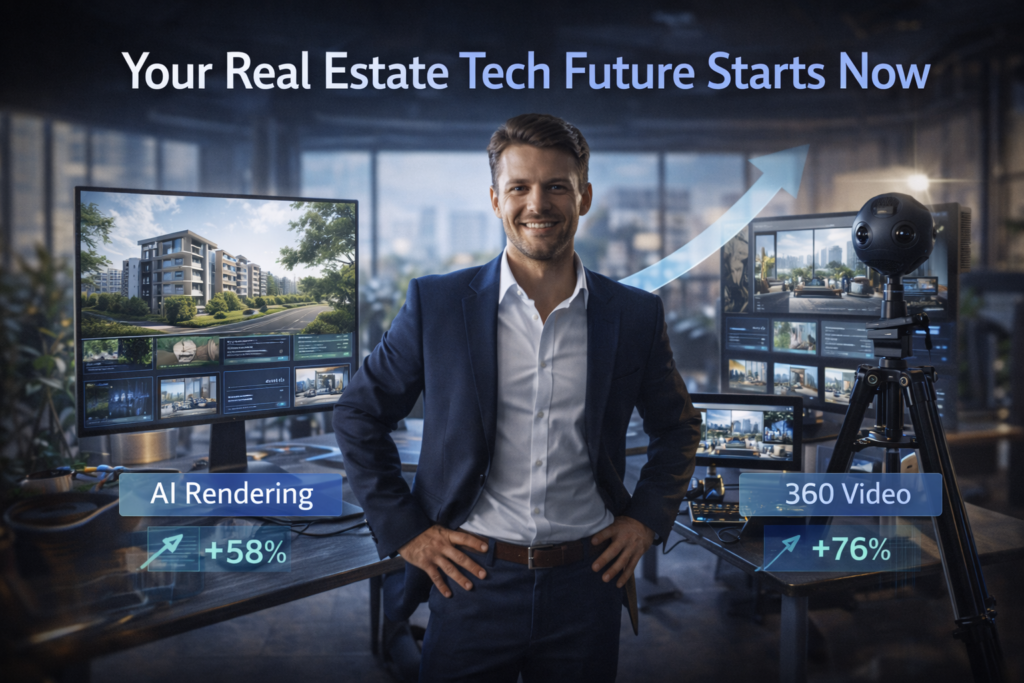
Real estate developers who implement both AI rendering and 360 video technology today gain competitive advantage with faster sales and higher buyer satisfaction.
You’re not choosing between AI rendering and 360 videos like it’s one or the other. You’re deciding how to integrate both into your marketing strategy. The best developers are doing exactly this. They’re using AI rendering for the pre-construction and imagining stage. They’re using 360 videos for ready properties and existing inventory.
The real cost isn’t investment in technology. It’s the opportunity cost of not investing. Every day a property sits unlisted in these formats is a day your competitor is selling similar properties. Every buyer who chooses your competitor’s AI-rendered images over your static photos is lost revenue.
Professional visualization technology, powered by AI rendering and 360-degree virtual tours, is now essential infrastructure. Real estate services that incorporate these technologies are standard. Properties without them are falling behind.
Make your decision this week. Start with one technology. Measure results. Add the other. Build a comprehensive visualization strategy. Your properties will sell faster. Your buyers will be happier. Your competitive advantage will be clear.
This is how developers succeed in 2026. Not by having the cheapest properties. By having the best visualization. By making technology choices that actually work. Choose wisely.