
1.The Core Difference: Basic Cinematic Photography vs. Traditional Photography High-Intent Storytelling
Here’s a question most developers never ask themselves.
When a buyer scrolls past your property listing in 1.3 seconds — what made them stop? Or not stop? It wasn’t the price. It wasn’t the location tagline. It was the image. And that image either told a story or it didn’t. that’s create difference between Cinematic Photography vs. Traditional Photography
Traditional photography has one job: document the space. Show the room. Record what exists. Flat lighting, standard wide-angle lens, static frame. It answers the question “what does this look like?”
Cinematic photography has a completely different job: make the buyer feel something before they’ve read a single word. It uses natural light, intentional composition, shallow depth of field, and colour grading to answer a different question entirely — “what would it feel like to live here?”
One is a record. The other is a sales tool. If you want to see how this plays out specifically for properties, our real estate photography Mumbai portfolio shows the difference better than any comparison chart.
Behind the scenes: A professional camera and lighting setup bringing visual storytelling to life
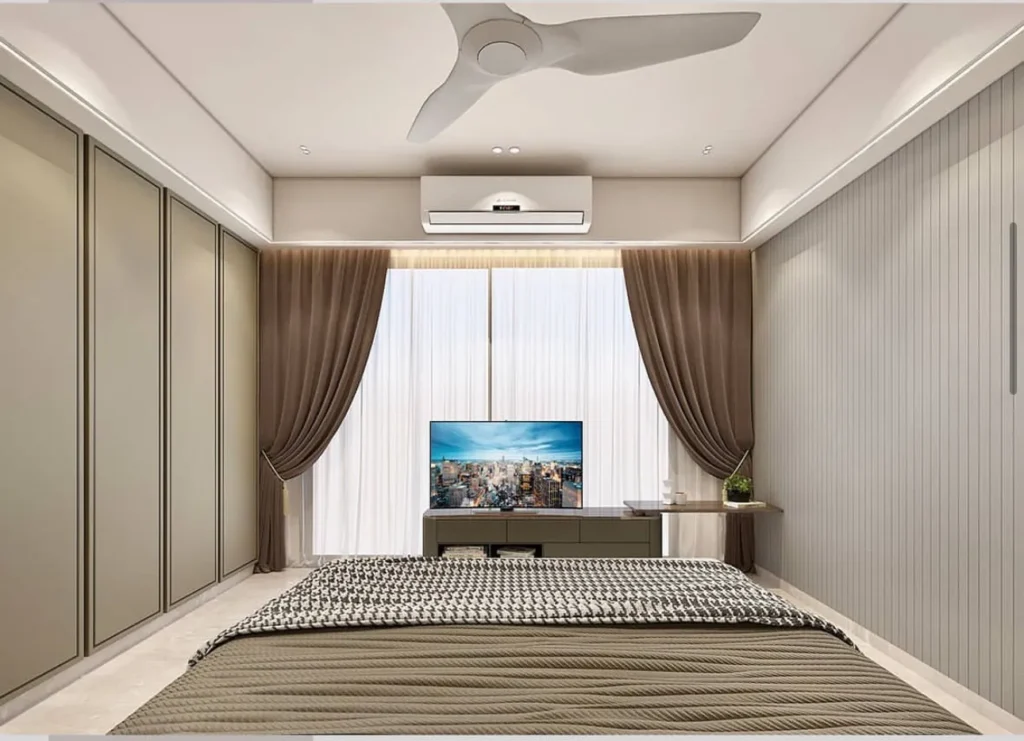
The developer’s sales team had been expecting the usual harsh wide-angle interior shots that turn luxury sample flats into flat and clinical spaces. Instead I killed the overhead glare, turned up the cove lighting, and made a nice, symmetrical hero shot that highlighted the rich textures and cozy mood. I brought up the camera preview and the lead sales manager froze in his tracks. “Now THIS sells the lifestyle,” he said. “It looks like a frame straight out of a luxury film.
2. Technical Breakdown: Camera Gear, Lighting, and Composition
This difference between the two approaches is not just aesthetic. It’s very technical, and every technical decision has a direct commercial impact.
Lighting Dynamics & Exposure
The traditional approach is to utilize the on-camera flash or auto-exposure bracketing. The result is predictable: glare on glass surfaces, blown-out windows, flat walls that lose all texture and depth.
Cinematic approach is built around natural light transitions — specifically golden hour windows at sunrise and sunset — combined with D-Log or S-Log camera profiles that retain highlight and shadow detail simultaneously.
The real-world difference? The living room faces the sea and at dusk looks like a still from a luxury hospitality brand campaign. Same room, flash picture. Looks like a 2011 property listing.
We’ve covered why golden hour timing specifically matters for high-rise projects in our piece on golden hour drone cinematography for luxury residential sales.
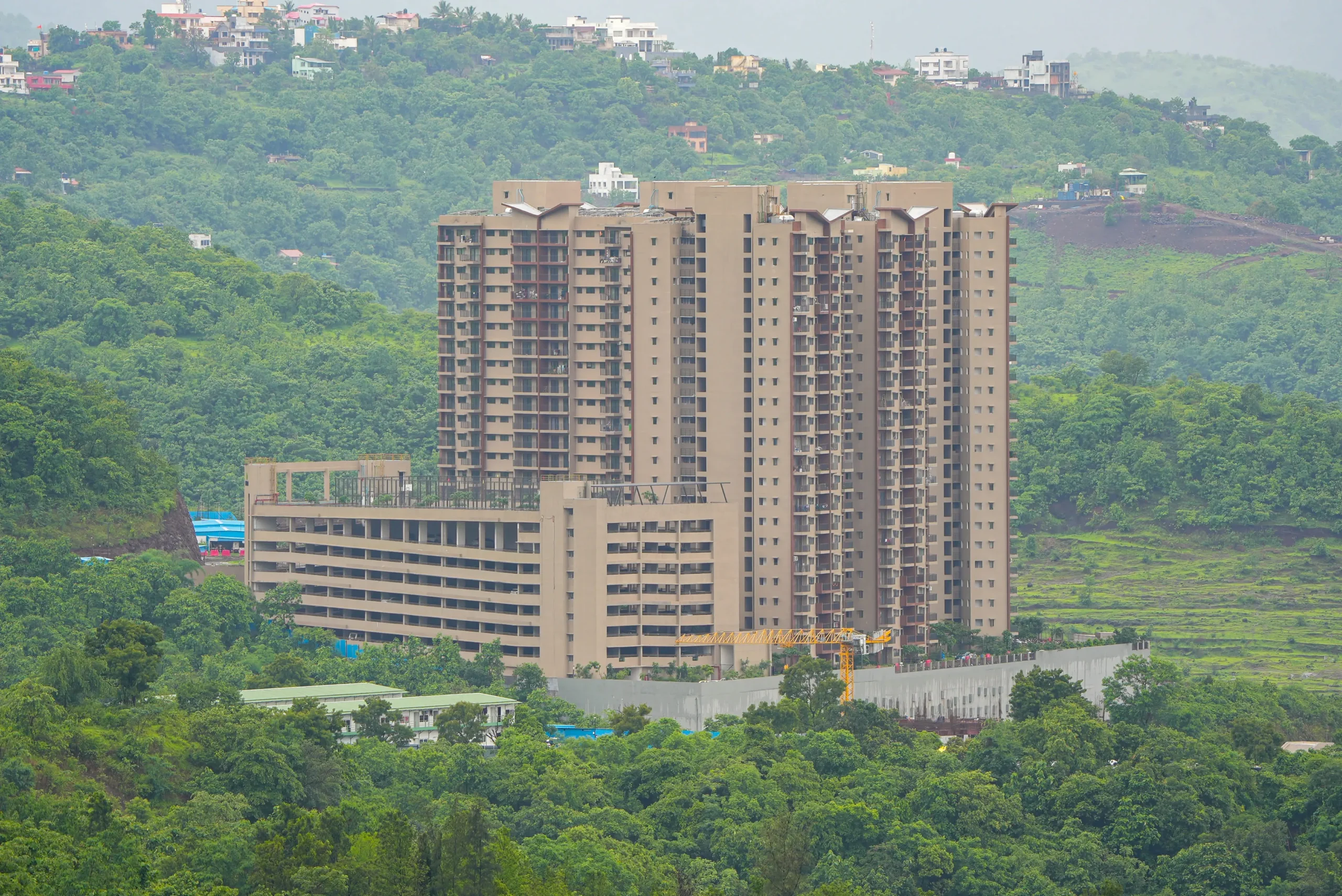
I shot this property on a Pune hillside, the developer was relying on flat, mid-day photos that made the high-rise look completely dead. I waited out the monsoon drizzle till 5.45 PM to catch that fleeting moment when soft golden light broke through the clouds. The warm glow from the lush green Western Ghats hitting the facade instantly turned a plain real estate shot into a high-end cinematic showpiece.
Lens Geometry & Depth of Field
This is how most traditional real estate photography quietly murders premium properties.
Traditional wide angle lenses, particularly below 16mm, distort the edges of walls, flatten every surface to a two dimensional plane and make rooms look way too large in a way that buyers immediately distrust.
The opposite is true for cinema primes and anamorphic lenses. They naturally compress space, create smooth background separation and draw the viewer’s eye exactly to where you want them to notice — the Italian marble, the floor to ceiling window, the skyline behind the terrace.
It’s the difference between a buyer thinking “nice room” and a buyer thinking “I want to be in that room.”
Motion & Telemetry Integration
Traditional photography stays at ground level. Static. Fixed. Two-dimensional.
Cinematic360’s approach adds a third dimension entirely.
Sweeping 4K aerial drone paths are combined with altitude-locked telemetry — the same precision system we use for high-rise elevation mapping — to capture not just the property, but the context it sits in. The neighbourhood. The views. The exact horizon line from the exact floor.
For a buyer deciding remotely, that context is often the deciding factor. Our drone photography Mumbai page shows the exact kind of aerial assets we produce for developers across commercial and residential projects.
An FPV drone shot captured the skyline from a high vantage point, while tilt-shift photography on the ground highlighted the grandeur of architectural details.
With the synchronized shoot at twilight, there was seamless color and lighting harmony between the sky-high video and the street-level stills.
Massive physical hoardings anchored ultra high res images and dynamic vertical cuts drove social media ad engagement.
Brokers closed leads faster with micro-teasers optimized for WhatsApp, helping them achieve pre-launch goals two weeks early.
Quick Comparison: Traditional vs. Cinematic360
| Feature | Traditional Photography | Cinematic360 Production |
|---|---|---|
| Primary Objective | Room documentation | Emotional engagement & faster closings |
| Lighting Strategy | Flat flash / auto-exposure | Golden Hour natural light & D-Log grading |
| Perspective & Depth | Flat, distorted wide-angle | Cinematic depth-of-field & 3D spatial feel |
| Aerial Capability | None or basic uncalibrated | RTK-locked high-altitude drone cinematography |
| Buyer Perception | Standard property brochure | Luxury aspirational asset |
3. Commercial Impact: Why Developers Are Making the Switch
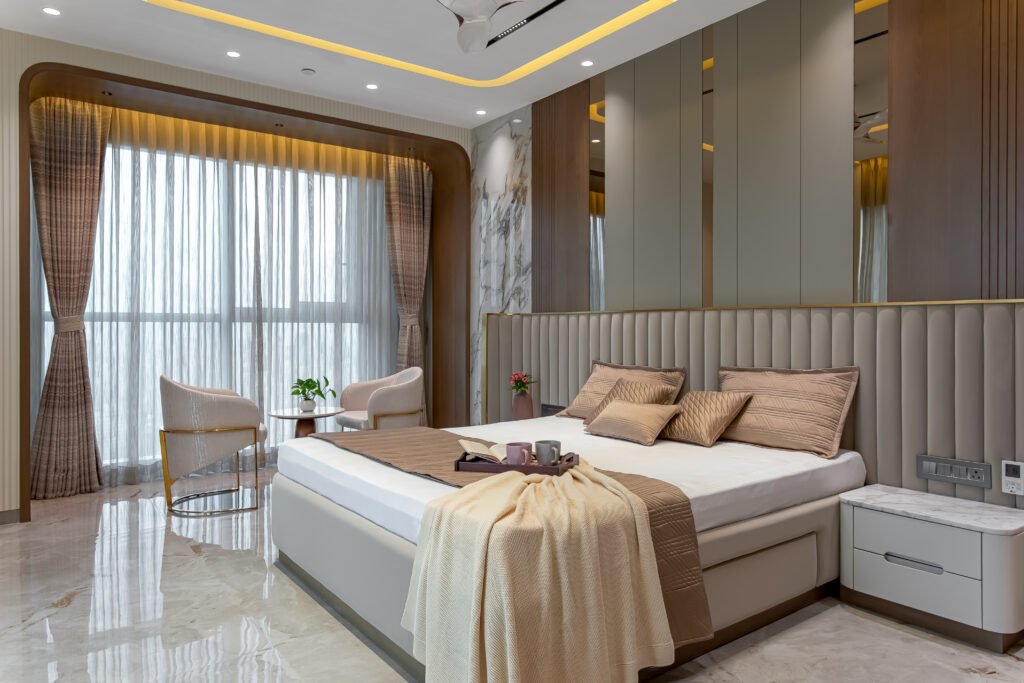
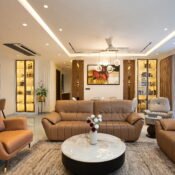
Symmetrical editorial shot of a luxury living room media center. The composition features a book-matched Italian marble accent wall, a floating wooden console, and integrated cove lighting. Photography and Videography
It’s not an aesthetic thing. It is about what happens in the sales phase
Reduced sales cycles.
HNI and NRI buyers do not commit serious capital on flat pictures. They need spatial confidence – a sense of knowing the property inside out without setting foot in it.
Cinematic visual assets breed that confidence. The buyer who views a well-produced property film for 90 seconds arrives at the first conversation 70% decided.
That changes everything about how the sales team operates. We documented exactly this outcome in our case study on how drone cinematography sold a ₹15-crore Mumbai penthouse in 30 days
Ad performance improves significantly.
In 2026, social media algorithms favor dynamic, film-like video content over static images, on Instagram, YouTube, and Meta ad platforms.
Performance campaigns with cinemagraphs continue to outperform standard property photo ads with click-through rates. The quality of the creative will directly affect your cost per lead.
The premium pricing remains.
If the visual assets of a property are magazine-worthy, the price tag attached to them is met with less resistance. The buyer’s frame of reference is different. They are no longer comparing your ₹35,000 per sq ft listing with a competitor’s floor plan — they are comparing experiences.
Project Spotlight: Ultra-Luxury High-Rise (3 & 4 BHK Residences)
-
Property Type: Premium residential tower (₹10 Cr+ starting price point)
-
Objective: Drive high-intent site visits during the pre-launch phase while reducing junk lead volume.
Strategy & Ad Formats
Instead of generic 3D renderings, we deployed cinematic 4K FPV aerial sweeps combined with low-light architectural ground stills across Meta and Google.
-
Meta (Instagram Reels & Stories — 9:16 Vertical Video)
-
Format: 15-second “Hook & Reveal” video ads featuring dusk lighting and seamless drone fly-throughs.
-
Creative Angle: Led with the rooftop infinity pool and skyline view in the first 3 seconds to filter out low-intent scrollers immediately.
-
-
Google Performance Max (YouTube & Display Video)
-
Format: 30-second landscape cinematic tours paired with high-intent Search retargeting.
-
Creative Angle: Focused on spatial layout, interior craft, and neighborhood proximity.
-
Measurable Results & Impact
| Metric | Static Rendering Baseline | Cinematic Video Campaign | Performance Gain |
| Click-Through Rate (CTR) | 1.1% | 3.4% | +209% boost |
| Cost Per Lead (CPL) | ₹3,500 | ₹2,050 | 41% cost reduction |
| Lead-to-Site Visit Rate | 6% | 18% | 3x higher conversion |
| Lead Quality | High rate of accidental clicks | Qualified budget match | Significant sales team efficiency |
Stop Letting Flat Images Represent Premium Properties
In the Mumbai property market, buyers are making decisions faster and with less face-to-face interaction with developers than ever before.
That’s your first conversation with them, the image they see at 7am, on their phone, commuting. Not your sales force. Not your leaflet. Not the site visit.
Either that picture gets 30 seconds of their attention or it doesn’t.
Flat documentation photography was made for another time. Cinematic production is created for how premium buyers are making decisions today, emotionally first, rationally second.
If you’re also managing construction progress documentation alongside your marketing assets, read how we handle phase-by-phase site progress tracking for investor transparency — it’s a different use case but often runs parallel to the same project.
Your property deserves to be seen properly.
Book a Cinematic360 Aerial & Architectural Production Consult
Frequently Asked Questions.
So is cinematic photography only for video or is it for stills too?
Both. Cinematic Still Photography employs film-like lighting ratios, deliberate colour grading and intentional framing to resemble a freeze-frame from a high-budget production. The motion and the static are working together – they’re all in the same visual language, not separate deliverables.
Why is cinematic photography better for luxury real estate in particular?
Because luxury buyers aren’t buying square feet.” They’re buying a version of their life, how it feels, how it looks, what it says about them. Standard real estate photography won’t do that. Cinematic imagery can do this because it is built on the same emotional mechanics that have been used by luxury hospitality and automotive brands for decades.
For NRI buyers specifically, combining cinematic stills with a Matterport 3D virtual tour creates a complete remote buying experience — no site visit required.
What’s the actual production difference in terms of time and setup?
Significantly more involved than a standard shoot — and that’s the point. Golden hour windows are narrow. Lighting setups require preparation. Drone flights require planning, permits, and precision telemetry. The additional production investment is what separates an asset that drives decisions from one that gets scrolled past.