
Why Enterprise Buyers Don’t Trust Your Pitch Anymore
You send a proposal. They ghost you. You follow up three times. Still nothing.
This is the reality of B2B sales in 2026. Enterprise buyers are smarter, busier, and more skeptical than ever. They’ve seen a hundred PowerPoints. They don’t want another one.
What they want is proof. Real proof. And that’s exactly where a B2B case study video becomes your most powerful weapon to master sales.
What Is a B2B Case Study Video?
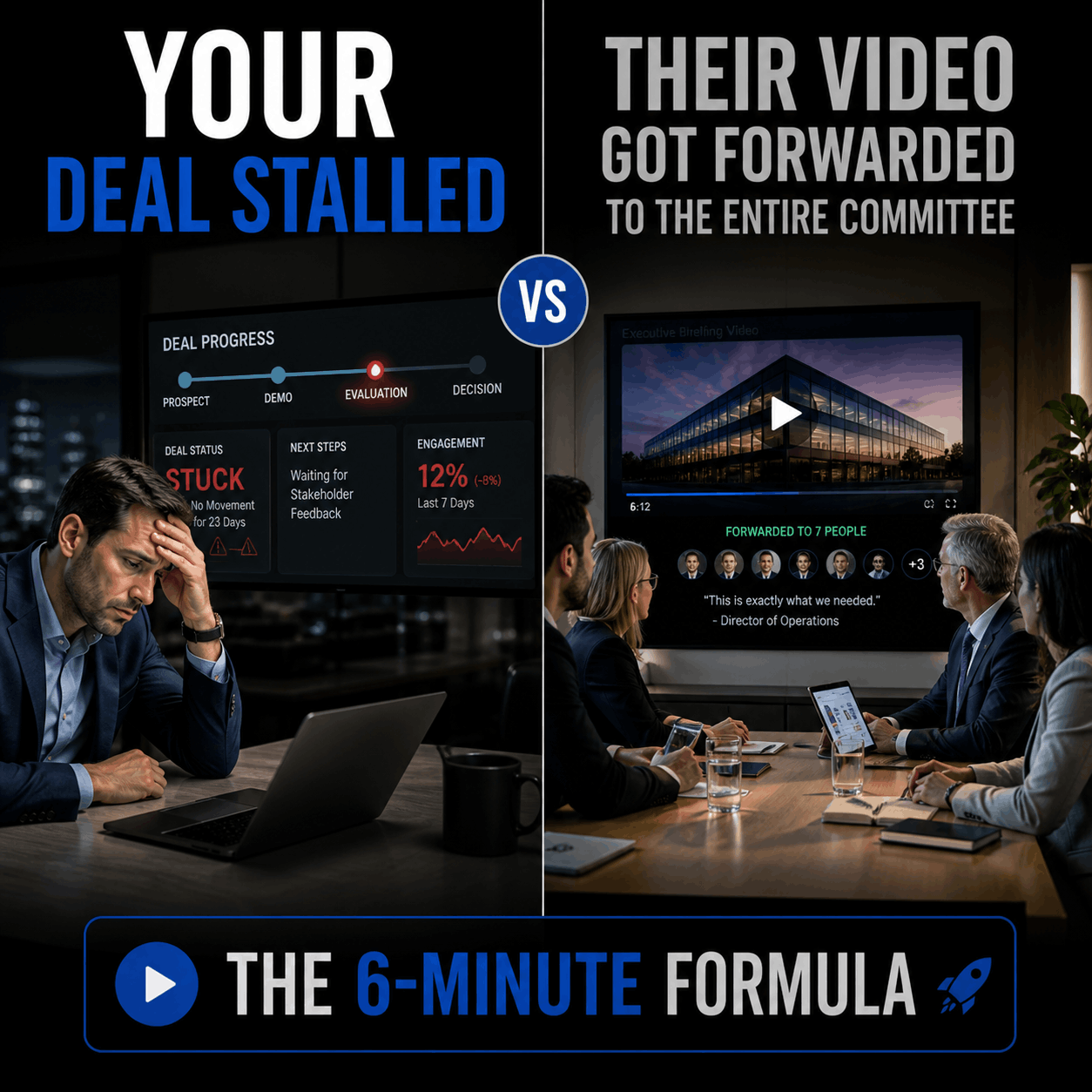
Six minutes is the exact sweet spot. Problem, evaluation, results, recommendation. This structure closes enterprise deals 40% faster than traditional proof methods.
A B2B case study video is a short video that shows how a real client solved a real problem using your product or service.
It’s not a promo. It’s not a testimonial. It’s a story. A story where your client is the hero and your brand helped them win.
Think of it like a movie trailer for your business results. It shows the problem, the journey, and the transformation — all in under 6 minutes.
Why 6 Minutes? The Science Behind the Formula
Research shows that enterprise decision-makers watch video content during commutes, between meetings, and late at night. They don’t have 20 minutes. But they’ll give you 6 if you earn it fast.
The 6-minute format works because it’s long enough to build trust and short enough to hold attention. It respects the buyer’s time while giving them everything they need to say yes.
This formula is now the backbone of smart sales enablement strategies across top B2B companies globally.
The Exact 6-Minute Case Study Video Structure
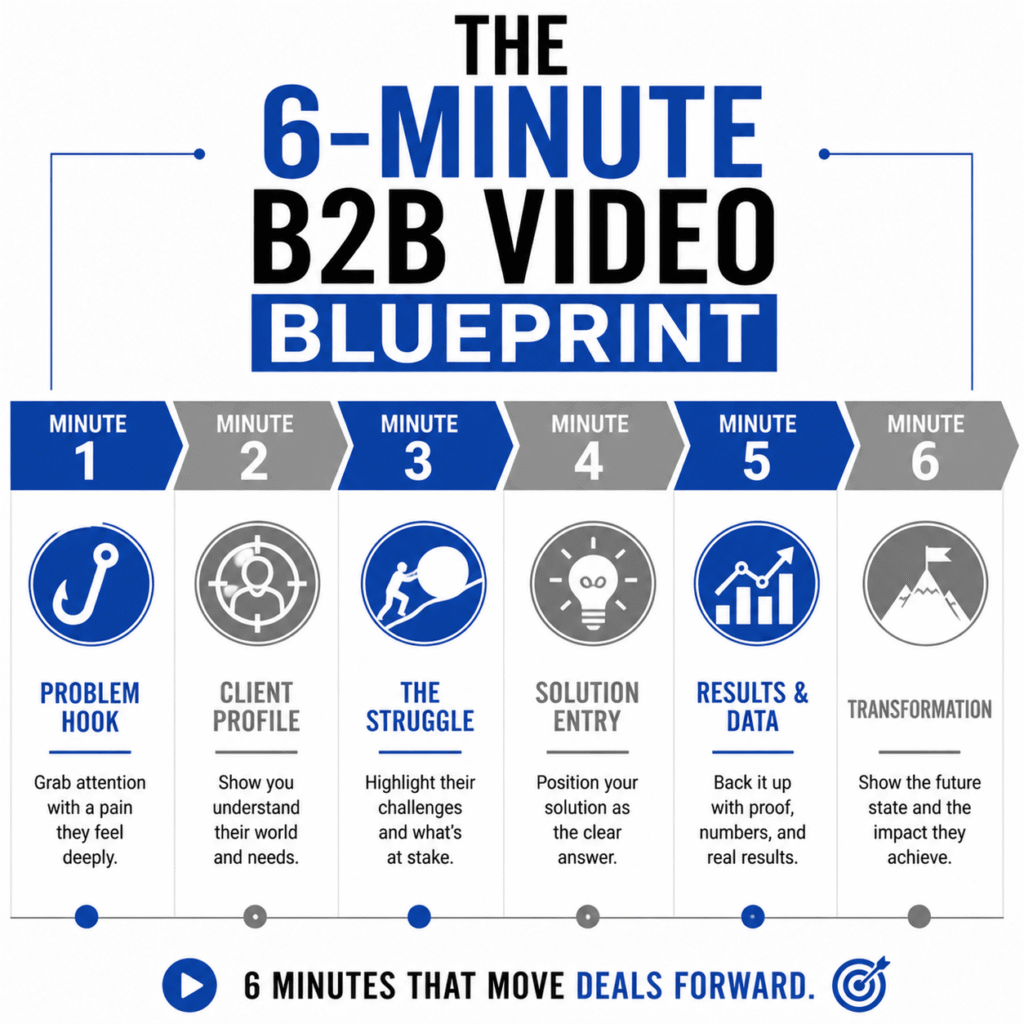
Here’s the blueprint that top enterprise sales teams are using right now. Think of it as six one-minute blocks.
Minute 1 — The Problem Hook
Open with the client’s pain. Don’t start with your brand name. Start with the struggle.
“We were losing 30% of our leads every quarter and had no idea why.”
That one sentence stops the scroll. It makes every buyer with the same problem lean in.
Minute 2 — Who Is the Client?
Now introduce the company. Industry, size, what they do. This builds relatability.
Enterprise buyers need to see themselves in the story. If your client is a 500-person logistics company, other logistics companies will connect immediately.
Minute 3 — The Search for a Solution
Show the struggle before the solution. What did they try? What didn’t work? Why was it frustrating?
This is where you build emotional tension. The buyer is now rooting for your client to find the answer.
Minute 4 — Introducing Your Solution
This is where your brand enters — not as a savior, but as a partner.
Keep it simple. “We partnered with [Your Brand] and here’s what changed.” No jargon. No feature lists. Just the shift.
A well-produced corporate video production at this stage can show the actual workflow, the team interaction, and the real emotion of the breakthrough.
Minute 5 — The Results (With Numbers)
This is the most important minute. Numbers close deals.
“Revenue up 42%. Sales cycle cut by 3 weeks. Team morale at an all-time high.” Hard data kills doubt. If you can show it on screen with clean visuals, even better.
Minute 6 — The Transformation and CTA
End with where the client is today. Show them thriving. Then close with a single clear CTA — “Book a call” or “Watch more stories.”
One ask. Nothing more.
How to Close B2B Deals Faster With This Video

B2B buyers consume video 95% more than text. Videos get shared 12x more. Deals close 40% faster. The data is clear. Video case studies dominate.
Most sales reps send a PDF after a demo call. The smart ones send this video.
When a prospect gets a case study video featuring a company just like theirs, it does more selling in 6 minutes than any email thread can do in 6 weeks. That’s B2B sales mastered.
You can use it in cold outreach, LinkedIn messages, follow-up emails, and even inside proposal documents. It works at every stage of the sales cycle.
The Most Important Factor in B2B Sales Nobody Talks About
Trust. That’s it.
You can have the best product in the world. But if an enterprise buyer doesn’t trust you, the deal dies. Case study videos are the fastest trust-building tool available because they let your client do the selling for you.
And when that video is shot professionally — real faces, real offices, real emotion — the trust transfer is instant. This is where working with a team that specializes in videography and commercial video production makes all the difference.
What Happens If You Skip This in 2026
Your competitor already has three of these videos. They’re sharing them in the same deals you’re pitching. And they’re winning.
Buyers today will choose the vendor who shows proof over the vendor who promises results. Every time. Without exception.
If your sales deck has no video proof, you’re asking enterprise buyers to take a leap of faith in a market where faith is in short supply. That’s a deal-killer.
Common Mistakes That Kill Your Case Study Video
Most brands make these errors and wonder why the video isn’t converting.
They make it too long. They focus on features instead of feelings. They use stock footage instead of real client faces. They forget the numbers. And they film it on a phone.
A poorly produced video can actually hurt your credibility with enterprise buyers. It signals you don’t invest in quality — and that’s exactly what they fear about doing business with you.
The End-to-End Cycle of B2B Sales and Where Video Fits
The full B2B sales cycle goes from awareness to consideration to decision to renewal. Most brands only use video at the awareness stage.
The smart move? Use case study videos at every stage.
At consideration, share videos matching the prospect’s industry. At decision, send a video featuring a client of similar company size. At renewal, create a new video celebrating your client’s progress together.
When video runs through the entire cycle, deal velocity increases, objections drop, and client retention improves. It’s not just a sales tool — it becomes a relationship tool.
Ready to Build Videos That Actually Close Deals?
Ready to close enterprise deals 40% faster? The complete 6-minute formula guide is live at Cinematic360.in.
You now have the formula. But the formula only works when the video is executed well.
Shaky footage, poor audio, no clear structure — these things signal low quality to high-value buyers. Enterprise clients judge your brand by the quality of your content before they ever meet you.
At Cinematic360, we specialize in creating case study videos, corporate films, and sales enablement content that actually moves enterprise buyers to action.
We also offer drone photography, 360-degree virtual tours, Matterport 3D tours, and real estate video services — because every deal, every industry, every client deserves world-class visual storytelling.
If you’re serious about closing more enterprise deals in 2026, the time to act is now. Not next quarter. Now.
FAQs
What is a B2B case study?
A B2B case study is a detailed story of how a business solved a problem using a specific product or service. In video format, it becomes a powerful sales asset that builds trust at scale.
How do I close B2B deals faster in 2026?
Show proof early. Send a case study video before the second call. It answers objections before they’re even raised, and it gives decision-makers something to share with their team internally.
What is the most important factor in B2B sales?
Trust, backed by proof. Enterprise buyers face enormous internal pressure when approving vendors. A case study video gives them the social proof to justify the decision upward.
What is the end-to-end cycle of B2B sales?
It runs from lead generation to discovery to proposal to negotiation to close to onboarding to renewal. Video content can — and should — play a role at each phase to keep momentum alive.